Overhead Crane Inspection Frequencies Explained: Daily, Frequent, Periodic and Annual
A plain-language explainer of the three inspection tiers described in CSA B167, OSHA 1910.179 and ASME B30.2 — and how to set the right interval for your CMAA service class.

How Crane Advisory Group Helps
Reading the standard is the easy part. Applying it to your cranes is the job.
Crane Advisory Group is an independent overhead crane and material handling consultancy led by Bryan Whitty, Founder & Principal Consultant, with 15+ years in the crane industry. We don't sell cranes, parts or service contracts — so what you get back is a recommendation, not a quote.
Compliance Gap Review
Where your maintenance, inspection and records program actually sits against the CSA B167 edition your province names — documented in writing.
Specs, Bids & Quotes Reviewed
Duty class, options, scope and exclusions checked before you sign — so you buy the crane or contract you need, not the one that was easiest to quote.
Independent Second Opinion
Repair, replace or modernize — reviewed by someone with no equipment, parts or service contract riding on the answer.
- In the overhead crane industry
- 15+ yrsIn the overhead crane industry
- Equipment, parts or service margin
- 0%Equipment, parts or service margin
- Standards referenced: CSA B167 · CMAA · ASME B30
- 3Standards referenced: CSA B167 · CMAA · ASME B30
- Scope and fee agreed before work starts
- FixedScope and fee agreed before work starts
Free download: CSA B167 Overhead Crane Compliance Checklist
A 5-page, vendor-neutral self-audit covering jurisdiction and edition, crane register, maintenance program, inspections and records, structure, electrical, training, modifications and vendor oversight. Enter your work email and the PDF opens immediately.
No newsletter spam. Every engagement follows the same documented review process.
See how an engagement worksA different cost structure than asking your crane supplier. Our work is advisory-only and scoped and quoted before it starts. There is no equipment margin, parts markup or service agreement attached to the advice — and a scoped review is a small line item next to the capital purchase, modernization or multi-year contract it is reviewing.
Every overhead crane standard in North America — CSA B167 in Canada, OSHA 1910.179 and ASME B30.2 in the US — requires the same three-tier inspection framework: frequent, periodic and comprehensive annual. What trips owners up is not the tiers themselves but the interval within each tier and who is qualified to sign the report.
This is the plain-language version. Our full Overhead Crane Inspection Guide covers scope, standards and reporting in depth.
The three tiers, plainly
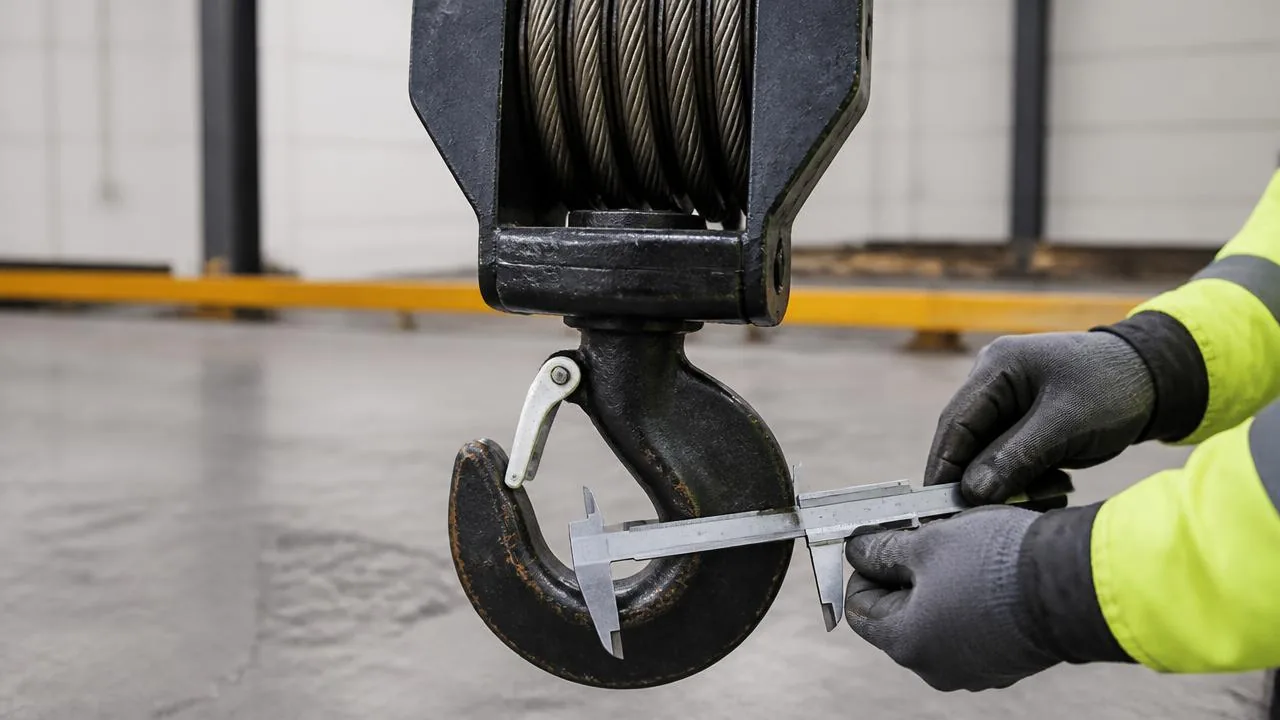
Frequent — operator-level, pre-use or daily. Visual and functional. No formal report; a defect log is enough. Covers controls, brakes, limit devices, hooks, wire rope condition, warning devices.
Periodic — documented, performed by a qualified inspector. Interval ranges from monthly to yearly depending on service class. Scope covers structural, mechanical, electrical, safety devices and running surfaces. Report signed, retained.
Comprehensive annual — the deepest scope. Structural measurements, wire-rope inspection, brake and hoist teardown as warranted, functional testing of limit and overload devices, load testing where applicable. Written report with photos, measurements and a defect closure plan.
Interval by CMAA service class
The single biggest mistake we see is running a Class F crane on a Class B schedule.
- Class A (standby / infrequent) — powerhouse and transformer-bay cranes. Periodic quarterly, annual full scope.
- Class B (light service) — light assembly, repair shops. Periodic quarterly, annual full scope.
- Class C (moderate service) — machine shops, paper mill machine rooms. Periodic monthly, annual with wire-rope focus.
- Class D (heavy service) — heavy machine shops, foundries, fabricating plants. Periodic monthly, annual with structural measurements.
- Class E (severe service) — cement mills, lumber mills, container yards. Periodic bi-weekly to monthly, annual with load test as warranted.
- Class F (continuous severe) — steel mills, hot-metal handling, scrap yards. Periodic weekly to bi-weekly, annual with full structural, wire-rope and load-test discipline.
Environmental severity — heat, dust, corrosion, wash-down — tightens the interval further within each class.
Who signs the report
The current edition of CSA B167 tightens the definition of "qualified inspector" — documented training, demonstrable experience on the specific equipment type, and the ability to interpret findings against the governing standard. A generic millwright ticket is no longer sufficient on its own. Under OSHA 1910.179, the equivalent test is whether the inspector is "designated" and competent for the scope performed. Every report should name the inspector and carry their signature.
What the report must contain
- Named inspector, signature, date
- Crane identifier and CMAA service class
- Governing standard reference (CSA B167 or ASME B30.2 + OSHA 1910.179)
- Scope statement — what was and was not inspected
- Condition ratings and photos for each component
- Defect list with severity ranking and recommended action
- Closure status on any prior open defects
Checkbox-only reports without narrative or photos will not survive an audit against the current edition of B167 or an insurance loss investigation.
Where owners commonly get it wrong
- One frequency for the whole fleet. A Class B jib and a Class E process crane on the same annual — the process crane is under-inspected and heading for a failure.
- The vendor writes the scope. The inspection contractor writes what they are comfortable delivering, not what the standard requires. The owner should write the scope; the contractor should execute it.
- Nobody closes the loop. Findings sit open across inspection cycles because there is no workflow to convert them into work orders with dates and sign-off.
- Retention gaps. Inspection records, load-test records and modification packages have different minimum retention. Losing any of them creates exposure.
Where CAG fits
We do not perform inspections. We design and audit inspection programs, write the report templates, and audit the reports your contractor delivers on your behalf. That independence is what lets us tell you when a scope is under-delivered or a schedule is mis-calibrated to your service class.
If your inspection program was inherited from a vendor and has never been engineered to your fleet, that is where to start.
FAQ
Frequently asked questions
- How often should an overhead crane be inspected?
- Frequency is driven by duty classification, service conditions and applicable legislation, not by a single universal number. Programs typically combine pre-use checks, periodic inspections and more detailed periodic examinations at longer intervals.
- What is the difference between frequent and periodic inspections?
- Frequent inspections are shorter, higher-frequency checks focused on operation and obvious defects. Periodic inspections are more detailed examinations of structure, mechanisms and safety devices, with formal documentation.
- Can inspection intervals be extended?
- Intervals can only be adjusted with justification based on duty, environment, condition history and applicable requirements, and the rationale should be documented.
Related services
How CAG helps on this
Related industries
Industry pages worth reading next
More field notes
11 min · Crane Safety & Compliance
Overhead Crane Operator Training in Canada
11 min · Overhead Crane Procurement
Overhead Crane Specifications: Duty Cycle, True Vertical Lift, Hazardous Classification and Outdoor Temperature
10 min · Overhead Crane
RFID Access Cards for Overhead Cranes: Qualified Operators Only, Full Accountability