Why a Hoist Spare-Parts Strategy Matters: Motors, Wire Rope, Brakes and Rope Guides
Which overhead crane hoist spare parts owners should stock — motors, wire rope, brakes, rope guides, contactors and load brakes — and how to size a spares list against CMAA service class and lead time.
Ask any plant engineer what took their overhead crane down for a week last year and the answer is almost never the crane itself. It is a $400 rope guide, a hoist motor with a 14-week lead time, or a set of brake pads nobody thought to shelf. A hoist spare-parts strategy is the cheapest reliability investment an owner can make — and one of the most consistently under-funded.
This post walks through the critical wear items on an overhead crane hoist, why each one matters, and how to size a spares list against your CMAA service class and realistic vendor lead times. It pairs with our Overhead Crane Preventive Maintenance Program and Crane Service Program Consultant pages.
Why spares are a reliability decision, not a purchasing one
A hoist that stops turning stops the plant. The math is not the cost of the part — it is the cost of the downtime while the part ships. On a Class D or E production crane, a week down can eclipse the annual maintenance budget. Yet most owners still treat spare parts as a purchasing line item, ordered reactively when something fails.
The right frame is different: a spares list is an engineered document, sized against service class, criticality, failure mode and lead time. Anything with a lead time longer than your tolerable downtime should be on the shelf.
The wear items that actually matter
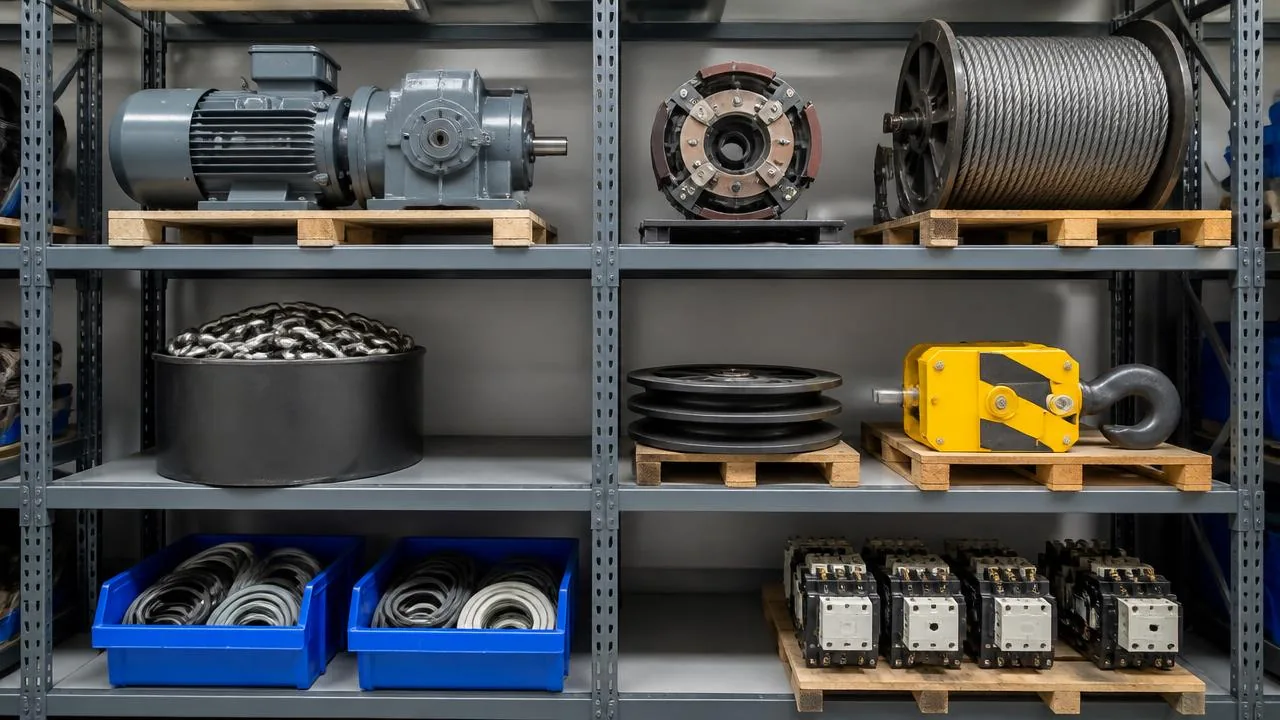
Hoist motor. The single longest-lead item on most cranes. OEM replacement motors on older or imported hoists routinely quote 10–20 weeks. Brush-type DC hoists, VFD-matched AC motors and integrated brake motors are all effectively custom orders. Any Class D or higher hoist should have a spare motor identified, sourced and — where budget allows — on the shelf or under a vendor stocking agreement.
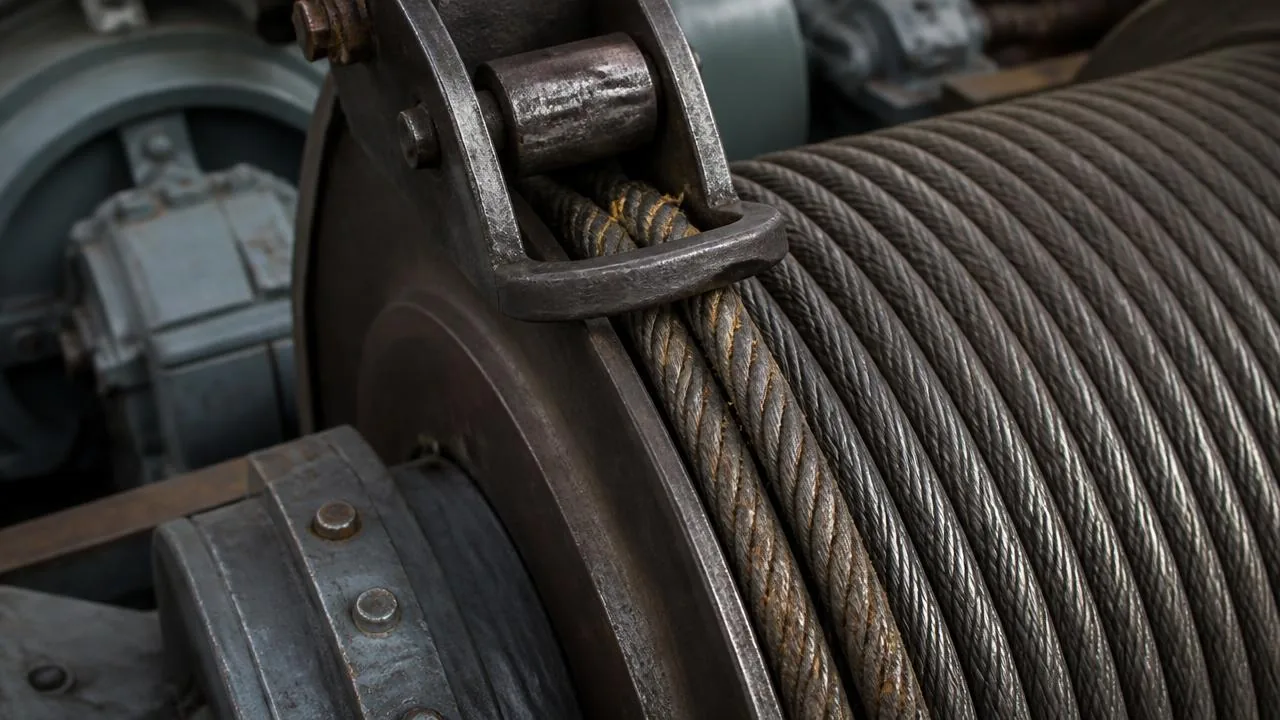
Wire rope. The most misunderstood spare on the crane. Wire rope is a consumable, not a permanent component. CSA B167 and ASME B30.2 both require retirement at defined broken-wire counts, diameter loss, corrosion or distortion. Owners who wait until the inspector red-tags the rope then discover the OEM-specified rope construction (rotation-resistant, compacted-strand, specific lay direction) is a 6–10 week special order. Stock one full replacement length per rope drum, tagged to the specific hoist.
Brakes. Hoist brakes are the safety-critical component that gets the least attention. Two categories matter: the holding brake (electric shoe or disc brake that sets when power drops) and the load brake (mechanical or regenerative brake integrated into the gearbox). Wear items include shoe linings, disc pads, solenoids, springs and adjustment shims. A worn or mis-adjusted holding brake is the leading cause of load-drop incidents. Every crane should carry a brake service kit sized to the specific brake model.
Rope guides. The unglamorous $200–$600 part that grounds cranes for weeks. The rope guide keeps wire rope seated in the drum grooves; when it wears or breaks, the rope jumps grooves, crushes itself, and takes the drum out of service. Plastic guides on European hoists (Demag, Stahl, Konecranes CXT) are consumables — plan on replacement every 3–7 years depending on duty. Always stock one.
Contactors and controls. On non-VFD hoists, the mainline and reversing contactors are wear items — the tips pit, weld, or drop out. On VFD hoists, the drive itself becomes the long-lead item: 8–16 weeks for a like-for-like replacement, and firmware/parameter files are often lost. Stock a spare drive and — critically — a saved parameter file for every VFD on site.
Load brake / gearbox internals. Not a shelf item on most fleets, but the failure mode matters: a failed load brake means uncontrolled lowering. Include gearbox oil sampling in the PM program so bearing and gear wear are caught before catastrophic failure.
Limit switches. Rotary geared limits and paddle limits are inexpensive, high-turnover items with 4–8 week lead times when they finally fail. Stock two of each type in service.
Festoon, cable reels and collectors. Power collection is the number-one cause of nuisance downtime. Carbon brushes, collector shoes, festoon trolleys and cable reel slip rings should all be on the shelf.
How to size the list against CMAA service class
The higher the service class, the more of the list migrates from "identified vendor, quotable" to "on the shelf, tagged, rotated."
- Class A / B (standby, light service) — brake kit, rope guide, limit switches, contactors. Motor and wire rope identified and quotable.
- Class C / D (moderate to heavy service) — everything above, plus wire rope on the shelf, spare VFD drive with saved parameter file, festoon consumables.
- Class E / F (severe, continuous severe) — everything above, plus a spare hoist motor, spare load brake components, gearbox oil sampling on schedule, and a stocking agreement with the OEM or a qualified rebuilder.
Environmental severity — heat, dust, wash-down, corrosion — pulls every item one class tighter.
The document itself
A working spare-parts strategy is a short document, not a spreadsheet buried in someone's inbox. It should list, per crane:
- Component, OEM part number, drawing reference
- Criticality (safety, production, convenience)
- Failure mode and consequence
- Lead time (verified with vendor, refreshed annually)
- On-shelf quantity vs. quoted / stocking-agreement
- Storage location and rotation date
- Cross-reference to PM procedure that inspects it
Owners who cannot produce this document for their fleet are, in practical terms, running without one.
Where CAG fits
We are vendor-neutral, so the spares list we build is engineered against your actual duty and lead-time reality — not padded with the OEM's preferred stocking package or gutted by a service contractor trying to hit a price point. We design and audit maintenance programs, write the service-contract scope that governs how spares are consumed and replenished, and audit the inspection reports that should be feeding the spares list in the first place.
If your last unplanned crane outage was longer than 48 hours because of a part on order, that is where to start.
FAQ
Frequently asked questions
- Which hoist spare parts should be held on site?
- Parts with long lead times or high downtime cost: brakes and brake components, wire rope, rope guides, motors, contactors and drives, limit switches and critical bearings. Stock is driven by criticality and lead time, not part price.
- How do I justify spare parts inventory?
- Compare the carrying cost of a part against the cost of production downtime for its lead time. A low-cost rope guide with a long lead time is often the strongest business case in the list.
- Are OEM parts always required?
- Parts affecting the load path, brakes or safety devices should meet the original specification and be documented. Elsewhere, qualified equivalents may be acceptable when engineering-reviewed and recorded.
Related services
How CAG helps on this
overhead crane preventive maintenance program
Overhead Crane Maintenance, Inspection & Service Program Review
Read moreoverhead crane service program consultant
Overhead Crane Service Program Consultant
Read moreoverhead crane inspection program consultant
Overhead Crane Inspection Program Consultant
Read more
Related industries
Industry pages worth reading next
More field notes
14 min · Maintenance
Motors, Gearboxes and Gearing: The Obsolete Parts That Keep Cranes Down for Weeks
9 min · Maintenance
Who Should Define Your Overhead Crane Maintenance Scope — the Owner or the Service Contractor?
10 min · Service Contracts
Before You Renew Your Crane Service Contract: 10 Questions Owners Should Ask