Overhead Crane Specifications: Duty Cycle, True Vertical Lift, Hazardous Classification and Outdoor Temperature
An overhead crane can meet the specified capacity, span and lifting height—and still be wrong for the operation. Four requirements need to be clearly defined before an RFQ is released.
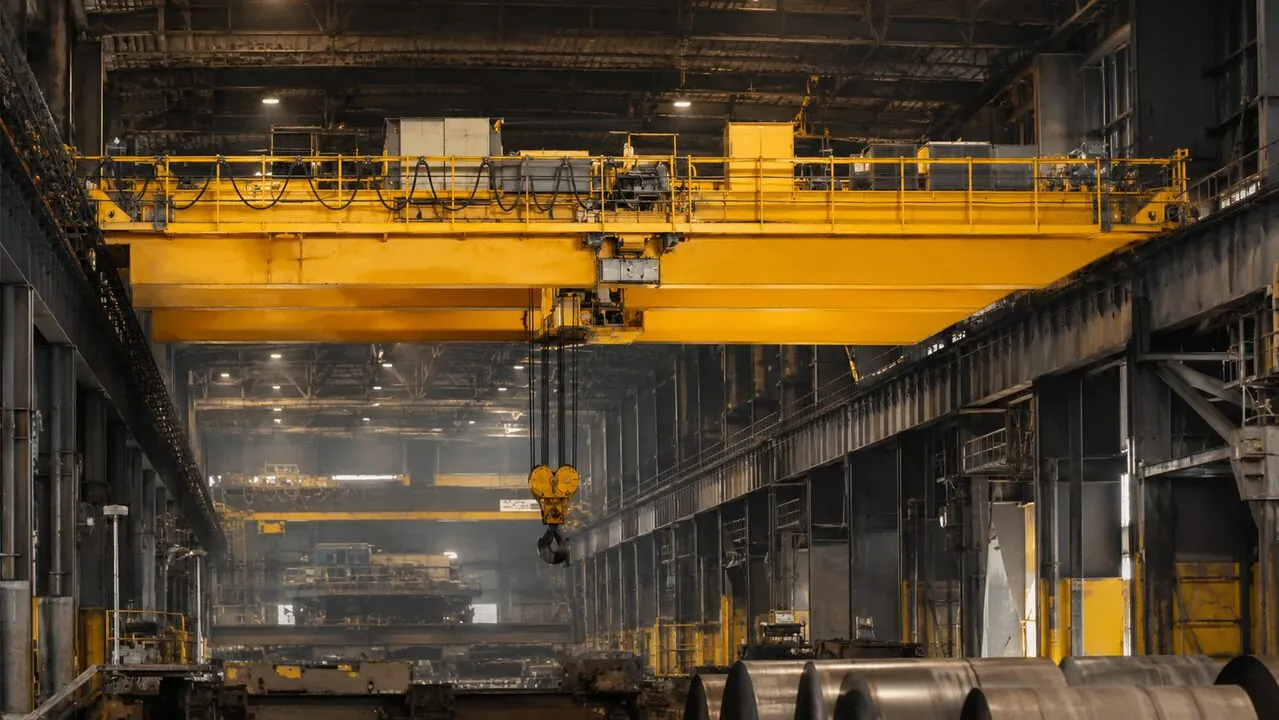
An overhead crane can meet the specified capacity, span and lifting height—and still be wrong for the operation.
The problem is often not the manufacturer or the equipment. It is that the request for quotation did not explain how the crane would actually be used.
Before an owner, EPCM or engineering firm releases an overhead crane RFQ, four operating requirements deserve particular attention:
- The crane's actual duty cycle
- Whether true vertical lift is necessary
- The complete hazardous-area classification
- The required operating temperature and outdoor environment
These requirements influence the hoist, motors, brakes, gearboxes, controls, wire-rope reeving, electrical equipment and overall crane design. If they are left undefined, every bidder may price a different interpretation.
1. "Heavy duty" is not a duty-cycle specification
Rated capacity establishes the maximum load the crane is designed to lift. It does not explain how frequently the crane will operate or what loads it will handle throughout an average day.
A 50-ton maintenance crane used ten times per year can have a much lighter duty requirement than a 10-ton production crane making hundreds of lifts every shift.
Instead of simply stating "heavy-duty crane," the RFQ should provide measurable operating information.
How many shifts will the crane operate?
Specify:
- Shifts per day
- Operating hours per shift
- Days of operation per week
- Expected seasonal or production peaks
- Whether the crane operates continuously, intermittently or primarily for maintenance
A crane operating one eight-hour shift has a different design requirement from one supporting a three-shift production process.
How frequently will it lift and travel?
The specification should estimate:
- Average lifts per hour
- Maximum lifts per hour during peak production
- Average operating cycles per day
- Typical lifting distance
- Typical trolley and bridge travel distance
- Number of starts, stops and positioning movements
- Required hoisting and travel speeds
The hoist, trolley and bridge do not necessarily experience the same duty. A crane may perform frequent short hoisting movements while travelling the full runway only occasionally. Each mechanism should be evaluated against the work it performs.
What is the average load?
The RFQ should state more than the crane's maximum capacity. It should explain the daily load spectrum:
- Average load lifted during normal operation
- Percentage of lifts below 25% of capacity
- Percentage between 25% and 50%
- Percentage between 50% and 75%
- Percentage above 75%
- Frequency of lifts at or near rated capacity
- Weight of below-the-hook devices that will remain suspended from the crane
A crane that regularly lifts close to its rated capacity experiences substantially different service than one that handles light loads most of the day.
This operating information allows the crane designer to establish the appropriate Crane Manufacturers Association of America, ISO or FEM classification instead of relying on assumptions.
The objective is not to purchase the highest duty class available. It is to purchase the correct crane for the real application. For a detailed explanation of the North American classes, see CAG's guide to CMAA service classes A through F.
2. Is true vertical lift actually necessary?
True vertical lift means the hook and load travel vertically without horizontal hook movement as the rope winds onto or off the drum.
Depending on its reeving arrangement, a standard single-reeved wire-rope hoist may produce some horizontal hook drift during lifting. A true-vertical-lift arrangement typically uses a reeving and drum configuration that keeps the hook block centred throughout the lift.
Applications that may require true vertical lift include:
- Installing or removing dies, moulds and machine components
- Lifting loads through a restricted opening
- Lowering equipment into a pit, shaft or enclosure
- Positioning equipment onto anchor bolts or alignment pins
- Automated or semi-automated crane operation
- Handling loads with limited allowable horizontal movement
- Using lifting fixtures that must remain aligned with equipment
- High-lift applications where small hook movement could become significant
True vertical lift is not automatically required for every crane. If the load can be raised, cleared and repositioned using trolley travel, limited hook drift may be acceptable.
The RFQ should ask bidders to identify:
- The proposed reeving arrangement
- Whether the hoist provides true vertical lift
- The expected horizontal hook movement over the full working lift
- Whether the required positioning tolerance can be maintained
- Any effects on headroom, hook approach, maintenance and lifecycle cost
"Reduced hook drift" and "true vertical lift" should not be treated as interchangeable terms.
The owner should define the acceptable movement, and the supplier should demonstrate how the proposed hoist satisfies it.
3. What is the complete hazardous-area classification?
Requesting an "explosion-proof crane" does not provide enough information to design or price the equipment correctly.
The project must identify the actual hazardous classification, such as:
- Class I, Division 1
- Class I, Division 2
- Class I, Zone 0
- Class I, Zone 1
- Class I, Zone 2
- An applicable combustible-dust or fibre classification
- An unclassified location
Division and Zone terminology should not be mixed casually. The applicable classification system must be established by the facility's qualified electrical, engineering or process-safety authority.
For example, "Class I, Zone 1" identifies a type of hazardous location, but it is still not the complete equipment specification.
The RFQ may also need to establish:
- Gas, vapour or dust group
- Temperature class or maximum permitted surface temperature
- Minimum and maximum ambient temperature
- Required equipment protection level
- Required North American certification and marking
- Approved protection methods
- Area boundaries and elevation limits
- Whether the entire crane or only part of its travel enters the classified area
The facility should provide a current hazardous-area classification drawing covering the crane's complete operating envelope.
This includes the bridge, trolley, hoist, controls, power supply and any equipment travelling through different boundaries.
The classification affects far more than the hoist motor. The review may need to include:
- Motors and brakes
- Electrical enclosures
- Limit switches and encoders
- Contactors and control panels
- Radio controls and pendants
- Lighting and warning devices
- Festoon systems, conductor bars and cable entries
- Heaters and ventilation systems
- Bearings, wheels and other potential mechanical ignition sources
Bronze hooks, bronze cladding or reduced-sparking wheels may form part of an engineered hazardous-location design. They do not, by themselves, make the complete crane explosion-proof or suitable for Class I, Zone 1.
Likewise, an ATEX or IECEx designation does not automatically establish that the equipment is approved for installation in Canada or the United States.
The required certification, marking and authority acceptance must be established for the project jurisdiction.
The crane supplier should not be expected to guess the facility classification.
Official references: OSHA hazardous locations requirements and the CSA Group definitions for hazardous locations in North America.
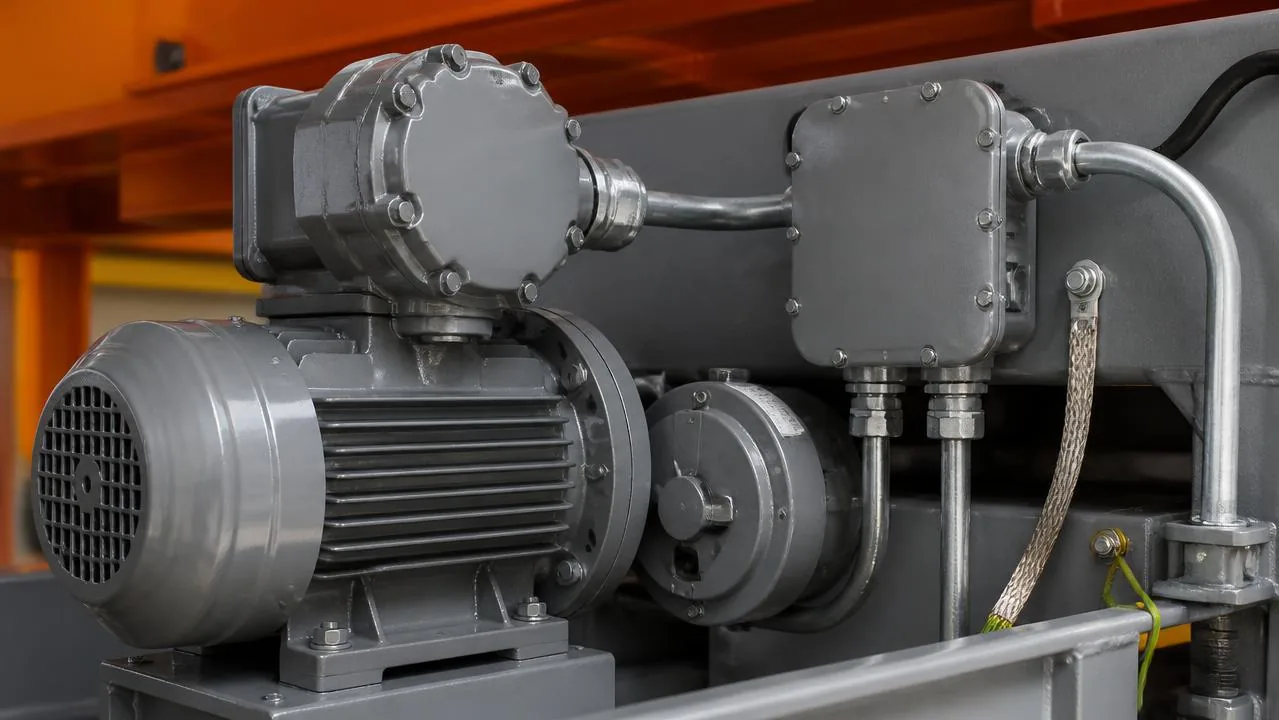
4. What temperature range must an outdoor crane withstand?
"Outdoor use" is not a complete environmental specification.
An outdoor crane in Alberta, Northern British Columbia or the Canadian Prairies may be exposed to extreme cold, snow, ice, wind, condensation and rapid temperature changes.
A crane operating on the Gulf Coast may face heat, humidity, salt exposure and severe weather.
The RFQ should define:
- Lowest anticipated ambient temperature
- Highest anticipated ambient temperature
- Minimum temperature at which the crane must start
- Required operating temperature range
- Required storage temperature when the crane is not operating
- Wind, snow and ice exposure
- Rain, humidity and condensation
- Dust, salt, chemicals or other contaminants
- Whether components or control enclosures will be heated
Temperature can affect:
- Structural material selection
- Motors and brakes
- Gearboxes and lubricants
- Bearings and seals
- Wire rope and rope lubrication
- Electrical cables and festoon systems
- VFDs, PLCs and electronic components
- Limit switches, encoders and load cells
- Radio-control batteries
- Enclosures, heaters and anti-condensation systems
Low-temperature suitability must apply to the complete crane system—not only the structural steel.
For outdoor cranes, the project may also need to establish requirements for:
- Wind alarms
- Parking brakes
- Rail clamps
- Storm locks
- Drainage
- Snow and ice management
- Enclosure protection
- Emergency securing procedures
Where paint specifications fit
Paint and coating requirements are important when the crane will operate in a corrosive, marine, chemical, fertilizer, wastewater, washdown or high-humidity environment.
However, paint should follow the environmental assessment. It should not replace it.
Once the environment has been defined, the project can determine whether the manufacturer's standard coating is adequate or whether a different surface preparation, coating system, dry-film thickness or inspection requirement is necessary.
For most indoor industrial cranes, paint is not one of the primary design decisions.
Duty cycle, operating environment, precision requirements and hazardous classification have a much greater effect on whether the crane is suitable for the work.
Four questions to answer before releasing the RFQ
Before requesting overhead crane bids, the owner and project team should be able to answer:
- How will the crane actually operate? Document the shifts, operating hours, lifts per hour, average daily load, percentage of near-capacity lifts, travel movements and expected design life.
- Does the load need to remain vertically aligned? Determine whether true vertical lift is required and define the maximum acceptable horizontal hook movement.
- What is the complete hazardous classification? Provide the classification system, Zone or Division, group, temperature class, ambient range, area boundaries and required certification.
- What environment must the crane survive? Define the minimum and maximum temperature, wind, precipitation, ice, humidity, dust, corrosion and other site conditions.
A technically compliant bid can still be the wrong crane
A supplier can comply with an incomplete specification and still deliver equipment that does not suit the operation.
If duty-cycle information is missing, bidders may assume different service classes.
If true vertical lift is not addressed, the selected hoist may produce unacceptable hook movement.
If the hazardous classification is incomplete, the equipment may not be approved for the location.
If the outdoor temperature range is omitted, standard components may not perform reliably during the site's coldest or hottest conditions.
That is why overhead crane specifications should begin with the operation—not a generic equipment description.
FAQ
Frequently asked questions
- Why is "heavy duty" not enough in an overhead crane RFQ?
- "Heavy duty" is a label, not a duty-cycle specification. Bidders need shifts per day, operating hours, lifts and travel movements per hour, and the daily load spectrum before they can select the correct CMAA, ISO or FEM classification. Without that data every bidder prices a different interpretation.
- When is true vertical lift required on an overhead crane?
- True vertical lift matters when the load must stay aligned during the lift — installing dies or machine components, lifting through a restricted opening, lowering equipment into a pit or shaft, setting equipment onto anchor bolts, or automated operation. If the load can be cleared and repositioned with trolley travel, limited hook drift may be acceptable.
- What does a crane supplier need to know about a hazardous area?
- Provide the current area-classification drawing and the crane's full operating envelope, the Zone or Division, gas or dust group, temperature class or maximum surface temperature, ambient temperature range, area boundaries, required equipment protection level and the certification and marking accepted in the project jurisdiction. An ATEX or IECEx marking does not by itself establish North American acceptance.
- What temperature information should an outdoor crane specification include?
- State the lowest and highest anticipated ambient temperatures, the minimum start-up temperature, the required operating and storage ranges, and exposure to wind, snow, ice, humidity, dust, salt and chemicals. Low-temperature suitability must cover the complete crane system, not only the structural steel.
Related services
How CAG helps on this
Related industries
Industry pages worth reading next
More field notes
10 min · Overhead Crane
Crane Runway Rail Alignment: The Hidden Cause of Wheel, Rail and Structural Wear
12 min · Overhead Crane
Overhead Crane Modernization: Capacity Upgrades, Structural Reinforcement and What the Building Has to Do First
13 min · Overhead Crane
Overhead Crane Modernization Project Timeline: From Planning to Final Inspection