Overhead Crane Asset Management in Mining, Steel and Refining: Who Is Actually Managing the Fleet?
Mines, mills and refineries run production-critical overhead cranes with no independent oversight. What owner-side crane asset management changes for procurement.

Ask a procurement leader at a Canadian mine, steel mill or refinery who manages their overhead cranes, and the answer is usually a company name — the OEM or the local service provider.
That is the problem in one sentence. The party that inspects the crane, writes the condition report, recommends the scope of work, quotes the scope of work and performs the scope of work is the same party. In most other categories of capital equipment, procurement would flag that immediately. In overhead cranes, it is the industry norm.
Production-critical assets managed like consumables
At a potash operation, the shaft and headframe cranes, mill maintenance cranes and load-out cranes are single points of failure for production. At a copper concentrator, the mill maintenance crane determines how long a reline takes. At a smelter, the casthouse and ladle cranes are part of the process itself. At a refinery, the compressor house and turnaround cranes sit on the critical path of a shutdown worth millions of dollars per day.
These are heavy-duty service class assets carrying production risk that would justify a full reliability program on rotating equipment of equivalent consequence. Yet in many facilities the entire management regime consists of a service contract, a periodic inspection report, and a maintenance planner who inherited the file.
Three things follow, and every one of them lands on procurement's desk.
Scope you cannot benchmark
An inspection report arrives with twenty-two deficiencies and a quote attached. Some items are safety-critical. Some are genuine reliability work. Some are discretionary. Nobody inside the organization is positioned to tell you which is which, so the practical choice becomes approve everything or defer everything. Neither is a decision.
Sole-source drift
Once one provider holds the inspection history, the drawings and the parts relationship, competitive tendering becomes theoretical. Renewal after renewal, pricing tends to move in one direction, and the switching cost quietly grows.
Capital plans built on nothing
"The crane is old" is not an asset strategy. Without independent condition and remaining-life information, modernize-versus-replace decisions get made in the budget cycle by whoever argues best, and the number carried in the plan is often whatever the vendor last quoted.
What owner-side crane asset management actually involves
An independent advisor does not replace your service provider, and does not perform inspections. It adds a technical opinion that works for the owner, in a chain that currently has only the supplier's.
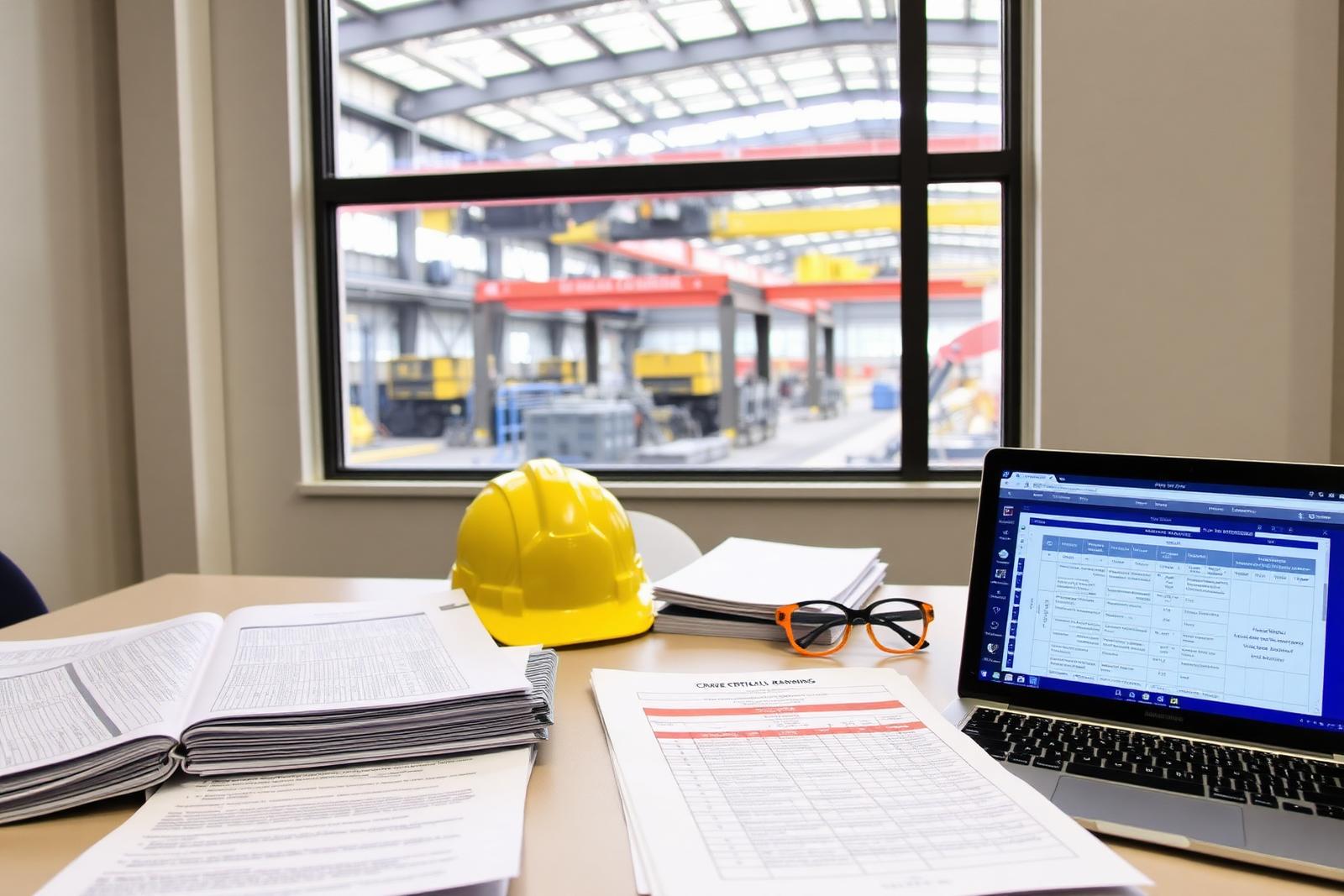
Asset register and criticality ranking. Every crane, hoist and runway captured with capacity, duty class, age, manufacturer, controls generation, structural configuration and production consequence — then ranked by what an outage would actually cost. Many sites find the register in the CMMS does not match what is hanging in the building.
Inspection and documentation review. A review of your existing inspection reports and maintenance records against CSA B167 and the applicable ASME B30 standards. This is often the highest-value first step, because it requires no shutdown and no site mobilization, and it frequently shows that reports being filed as compliance evidence would not hold up under scrutiny after an incident.
Repair scope review. Before a major repair is approved, an independent read on whether the recommendation addresses the actual failure, what the alternatives are, and what the remaining life picture looks like.
Modernize versus replace analysis. Independent lifecycle reasoning on ageing cranes — structural condition, controls obsolescence, parts availability, downtime exposure — producing a defensible position for the capital plan rather than a supplier's preference.
Specification and tender support. Technical specifications written by someone with no interest in who wins, so bids arrive on a comparable basis with a real evaluation framework behind them.
Service contract review. What the contract actually obligates the provider to do, what it quietly excludes, how change orders are priced, and whether the structure reflects the fleet.
Regulatory readiness. Oversight is tightening, particularly in British Columbia, where the Province has introduced legislation for a WorkSafeBC crane licensing and permitting program aimed at the parties responsible for cranes. Facilities with clean asset registers and defensible records will absorb that change easily. Others will not.
The procurement case
The value is not primarily a cheaper service contract, though better-scoped work usually costs less.
Comparable bids. Independent specifications turn an unpriceable scope into a competitive event.
Deferred capital. Cranes recommended for replacement are frequently serviceable for years longer with targeted structural and controls work. At mine or smelter scale, a single deferral is significant money.
Avoided unplanned downtime. A crane failure during a mill reline or a refinery turnaround does not cost the price of the repair. It costs the critical path.
Defensible documentation. When a regulator, insurer or counsel asks how you knew the crane was fit for service, "our service provider said so" is a weak answer.
Why vendor neutrality is the whole point
Crane Advisory Group sells no cranes, no parts, no service contracts and no training, and takes no commission or referral fee from any supplier. There is no equipment line to protect and no repair scope to grow. That constraint is deliberate, because it is the only structure under which the recommendation can be trusted — including when the recommendation is that your current provider is doing good work and your cranes are in better shape than you thought.
Start with the documentation
Send your last twelve months of overhead crane inspection reports and any quoted repair scope. We will tell you what the records show, what they omit, and whether the scope you have been asked to approve is proportionate to the condition described. No site visit and no obligation.
If your cranes are in good shape, that is the answer you will get.
FAQ
Frequently asked questions
- How is this different from a third-party inspection company?
- Inspection companies inspect, and many also sell repairs. An asset management function addresses the register, the criticality ranking, the capital plan, the contracts and the procurement strategy — the system that governs the cranes, rather than only their current condition. CAG does not perform inspections; qualified inspection, testing, repair and professional engineering work stays with appropriately qualified providers.
- Do we have to change service providers?
- No, and often you should not. The goal is to know whether the work you are buying is the work you need. Capable providers generally welcome an owner who can evaluate scope properly.
- What does an engagement start with?
- Usually a review of existing documentation — the crane list, recent inspection reports, maintenance records and any quoted scope. That can be done remotely, without disrupting operations.
- What size operation is this worth for?
- If a crane outage would delay a turnaround, a reline, a pour or a shipment, an independent review pays for itself on the first avoided event. Multi-site fleets almost always find material gaps in the asset register alone.
- Which regions do you cover?
- Canada and the United States, with particular focus on mining, oil and gas, steel and foundry, power generation and pulp and paper operations.
Related services
How CAG helps on this
overhead crane asset management
Overhead Crane Asset Management
Read moreoverhead crane procurement consultant
Overhead Crane Procurement Consultant
Read moreoverhead crane modernization consultant
Overhead Crane Modernization Consultant
Read moreoverhead crane repair or replace assessment
Overhead Crane Repair-or-Replace Assessment
Read more
Related industries
Industry pages worth reading next
More field notes
6 min · Mining
Newmont's Canadian Gold Portfolio: What Ownership Change Means for Crane Asset Management
9 min · Mining
Future Mining and LNG Projects in Canada and the USA: What the Next Wave Means for Overhead Crane Owners
14 min · Maintenance
Motors, Gearboxes and Gearing: The Obsolete Parts That Keep Cranes Down for Weeks