B.C.'s New Crane Licensing and Permitting Program: What It Means for Overhead Crane Owners
The Province has introduced legislation for a WorkSafeBC crane licensing and permitting program aimed at the parties responsible for cranes — owners, maintainers and service providers. What is confirmed, what is still undefined, and what overhead crane owners should do now.

How Crane Advisory Group Helps
Reading the standard is the easy part. Applying it to your cranes is the job.
Crane Advisory Group is an independent overhead crane and material handling consultancy led by Bryan Whitty, Founder & Principal Consultant, with 15+ years in the crane industry. We don't sell cranes, parts or service contracts — so what you get back is a recommendation, not a quote.
Compliance Gap Review
Where your maintenance, inspection and records program actually sits against the CSA B167 edition your province names — documented in writing.
Specs, Bids & Quotes Reviewed
Duty class, options, scope and exclusions checked before you sign — so you buy the crane or contract you need, not the one that was easiest to quote.
Independent Second Opinion
Repair, replace or modernize — reviewed by someone with no equipment, parts or service contract riding on the answer.
- In the overhead crane industry
- 15+ yrsIn the overhead crane industry
- Equipment, parts or service margin
- 0%Equipment, parts or service margin
- Standards referenced: CSA B167 · CMAA · ASME B30
- 3Standards referenced: CSA B167 · CMAA · ASME B30
- Scope and fee agreed before work starts
- FixedScope and fee agreed before work starts
Free download: CSA B167 Overhead Crane Compliance Checklist
A 5-page, vendor-neutral self-audit covering jurisdiction and edition, crane register, maintenance program, inspections and records, structure, electrical, training, modifications and vendor oversight. Enter your work email and the PDF opens immediately.
No newsletter spam. Every engagement follows the same documented review process.
See how an engagement worksA different cost structure than asking your crane supplier. Our work is advisory-only and scoped and quoted before it starts. There is no equipment margin, parts markup or service agreement attached to the advice — and a scoped review is a small line item next to the capital purchase, modernization or multi-year contract it is reviewing.
For the first time, British Columbia is moving to regulate not just the people who operate cranes, but the companies that own, maintain, repair, erect and dismantle them.
On March 3, 2026, the Province announced legislation enabling a new crane licensing and permitting program administered by WorkSafeBC. It follows seven crane-related worker deaths in B.C. over the previous five years and a year of work by the Province's Crane Safety Table, a group of regulators, industry leaders, labour representatives and technical experts convened by the Minister of Labour in June 2025.
If you own or manage cranes in British Columbia — including overhead and bridge cranes inside industrial facilities — this is the most significant change to crane oversight in the province in years. Below is a plain-language breakdown of what was announced, what is still undefined, and what crane owners should be doing now.
What B.C. actually announced
Three things are worth separating, because they are often conflated in news coverage.
A WorkSafeBC crane licensing and permitting program. Legislation was introduced to enable it. The stated goal is to ensure that the organizations overseeing crane work meet consistent, high-quality safety requirements. Program design, scope and timelines are still being developed.
Skilled trades certification for tower and mobile crane operators. This one has hard dates. As of July 6, 2026, tower and mobile crane operators have a one-year window to either register as an apprentice with SkilledTradesBC or challenge the certification exam and become a journeyperson. The requirement takes effect July 5, 2027.
Continued Crane Safety Table work. The Table's recommendations are driving both items above, and further measures are expected.
The gap the province is closing
Here is the part most crane owners have missed.
Under the current framework, crane operators in B.C. must be certified and registered with an oversight body. But the parties responsible for the equipment itself — the companies that own, maintain, repair, move, erect or dismantle cranes — face no equivalent requirement to be certified, registered or licensed.
That is the gap the Crane Safety Table identified, and it is the gap the licensing and permitting program is designed to close. The BC Crane Safety Association's executive director has described licensing and permitting as a practical way to manage accountability and shared responsibility across the industry.
The practical translation: accountability is shifting up the chain, from the person in the cab to the organization that owns and services the asset.
Why this matters even if you don't run a tower crane
Most of the coverage has focused on construction sites and tower cranes, and for good reason. Active tower cranes in B.C. rose from 261 in 2021 to a five-year high of 409 in 2024, with 373 operating at the time of the announcement. For scale, Toronto had 106, and eleven major U.S. cities had 127 combined.
But the licensing and permitting concept is written around responsibility for cranes, not around a single crane type. Overhead crane owners — manufacturing plants, steel service centres, pulp and paper mills, marine terminals, mining operations, hydro and utility facilities — should be watching this closely for three reasons.
- Regulatory momentum rarely stops at one asset class. Once a licensing regime exists for crane owners and service providers, extending its logic to other lifting equipment is straightforward.
- Your service providers may soon need to be licensed. If the companies that inspect, repair, modernize or relocate your overhead cranes fall inside the program, your vendor list becomes a compliance question, not just a procurement one.
- Due diligence expectations move before regulations do. WorkSafeBC officers, insurers and legal counsel increasingly benchmark against announced direction, not just enacted text.
What is still unknown
Being straight about the uncertainty is more useful than pretending the details exist.
- The scope of crane types and activities captured by licensing has not been published.
- Who needs a licence versus a permit — owner, employer, service contractor, or all three — has not been defined.
- Fees, application processes and renewal cycles are undetermined.
- Effective dates for the licensing program have not been announced, unlike the July 5, 2027 operator certification deadline.
- Whether overhead and bridge cranes are explicitly included remains an open question.
Anyone telling you they know the final requirements today is guessing.
Six things crane owners should do now
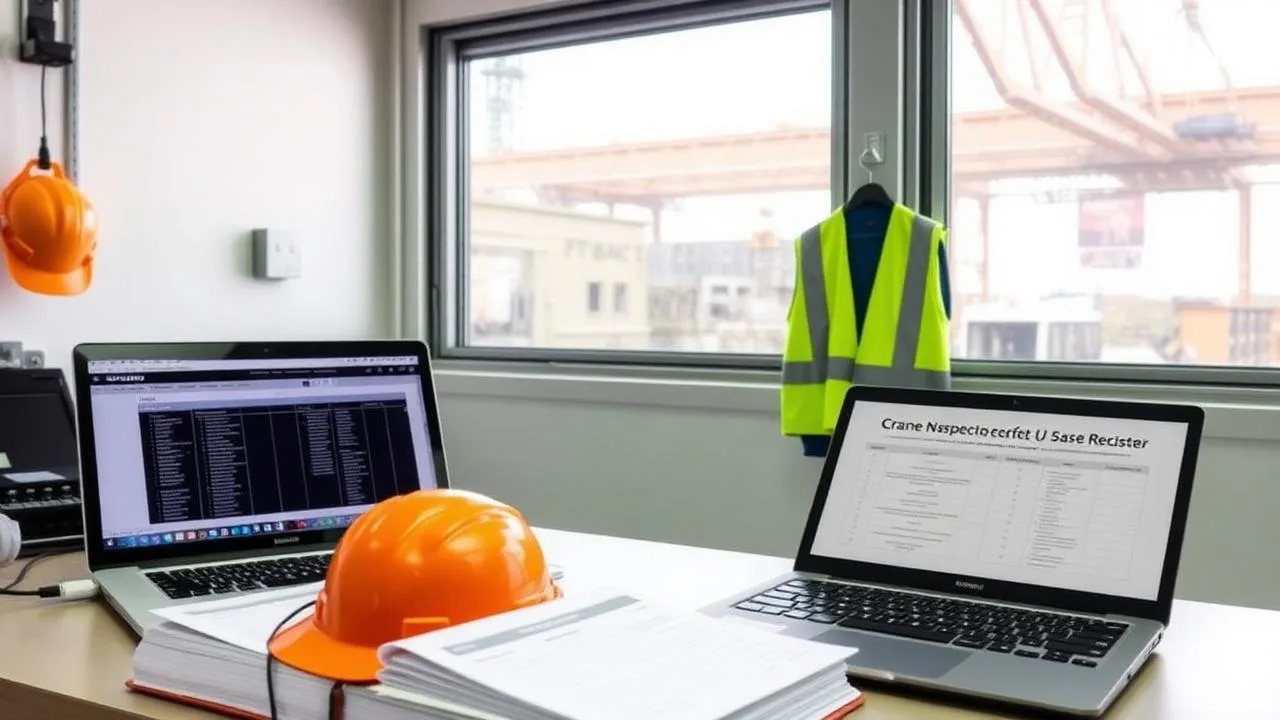
- Build an accurate [crane asset register](/corporate-crane-program-management). Every unit, capacity, class of service, manufacturer, year, location and duty cycle. Licensing regimes run on asset data. If you cannot produce a defensible register in an afternoon, that is your first project.
- Audit your [inspection and maintenance records](/overhead-crane-inspection-guide). Pre-use, monthly and annual inspection documentation, plus repair histories and load test records. Under a permitting model, records stop being internal paperwork and become evidence.
- Verify your service provider's credentials and trajectory. Ask what certifications their technicians hold, how they document work, and how they are preparing for the new program. Vendors who cannot answer clearly are a risk you are carrying.
- Review your engineering and structural documentation. Runway surveys, structural assessments, modification records and manufacturer documentation. Legacy overhead cranes in older facilities are often the weakest point here.
- Map your operator training against the new certification pathway. If you employ mobile crane operators, the one-year transition window is already running. Provincial and federal supports are available for tuition, travel and child care during the transition.
- Assign internal ownership. Someone needs to own crane compliance by name. In most facilities the answer today is "maintenance, sort of," which will not survive a licensing regime.
Where an independent advisor fits
Most of the technical advice available to crane owners comes from companies that also sell cranes, parts or service contracts. When the regulatory picture is unsettled, that conflict gets expensive — recommendations drift toward the scope of work the vendor happens to sell.
Crane Advisory Group is vendor-neutral by design. We sell no equipment, parts or service contracts. We help crane owners understand what they have, what their records actually show, what the emerging requirements mean for their facility, and where their money is best spent — benchmarked against CSA B167 and the applicable provincial regulation. Qualified inspection, repair, testing and professional engineering work stays with appropriately qualified providers.
If you own or manage overhead cranes in British Columbia and want a clear read on your exposure before the program details land, get in touch. We will tell you what we see, including when the answer is that you are in reasonable shape.
FAQ
Frequently asked questions
- When does B.C. crane licensing take effect?
- No effective date has been announced for the licensing and permitting program. The enabling legislation was introduced March 3, 2026, with the program to be designed and administered by WorkSafeBC. The separate operator certification requirement takes effect July 5, 2027.
- Does the new program apply to overhead cranes?
- Not confirmed. The announcements emphasize tower and mobile cranes, but the identified gap is framed around parties responsible for cranes generally. Overhead crane owners should plan on the assumption that oversight expectations are rising.
- Do crane operators need to do anything right now?
- Tower and mobile crane operators do. Between July 6, 2026 and July 5, 2027 they need to register as an apprentice with SkilledTradesBC or pass the certification exam to become a journeyperson. Overhead and bridge crane operators are not part of that certification program and remain subject to the qualification and competency requirements in the OHS Regulation.
- Who is affected beyond operators?
- The program is aimed at organizations that own, maintain, repair, move, erect, disassemble or are otherwise responsible for cranes — parties that currently face no certification or licensing requirement.
- What happens if I do nothing?
- Nothing immediately. But asset registers, inspection records and engineering documentation take months to assemble properly. Facilities that start after the rules are published will be doing compliance work under deadline pressure instead of on their own schedule.
Related services
How CAG helps on this
More field notes
6 min · Mining
Newmont's Canadian Gold Portfolio: What Ownership Change Means for Crane Asset Management
14 min · Maintenance
Motors, Gearboxes and Gearing: The Obsolete Parts That Keep Cranes Down for Weeks
6 min · Asset Management
Overhead Crane Asset Management in Mining, Steel and Refining: Who Is Actually Managing the Fleet?