Future Mining and LNG Projects in Canada and the USA: What the Next Wave Means for Overhead Crane Owners
A 2026 snapshot of new mines, mine expansions and LNG megaprojects across Canada and the USA — and what the buildout means for overhead crane procurement, CMAA/ASME duty class and maintenance programs.
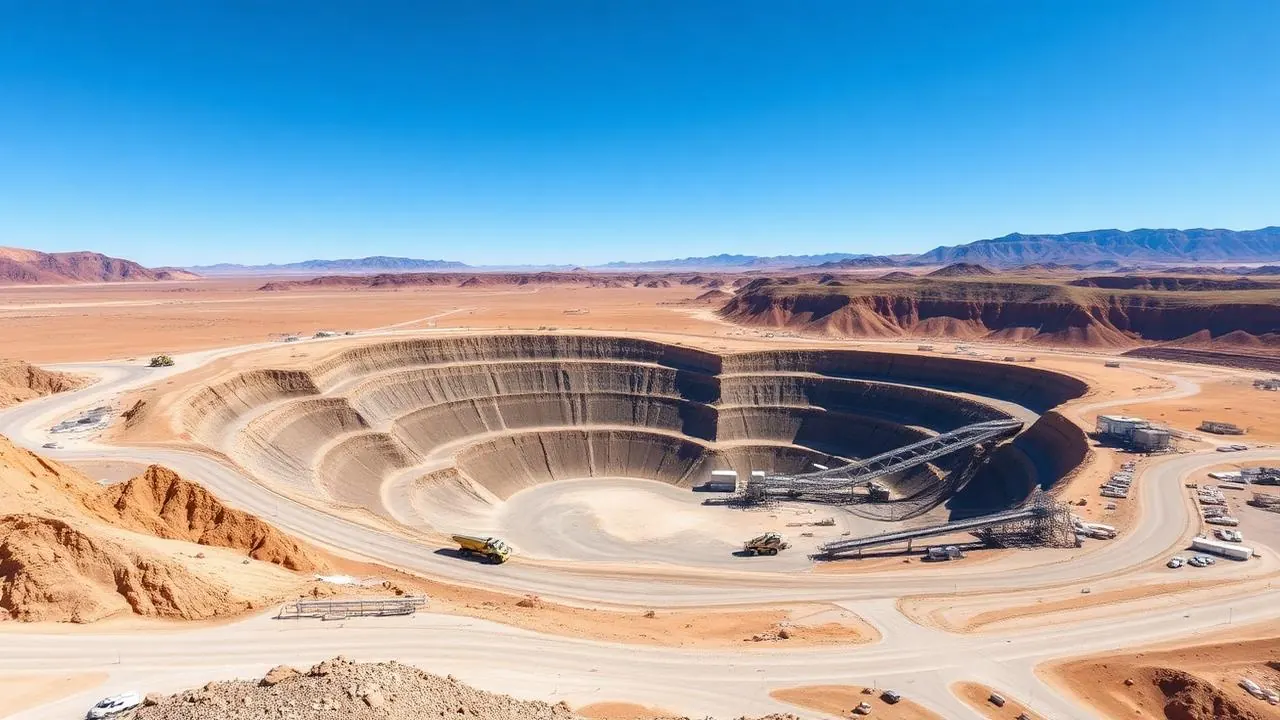
North America is in the middle of the biggest wave of mining and LNG capital projects in a generation. Critical minerals policy, AI-driven copper demand and a scramble for LNG export capacity are pushing new mines, expansions and liquefaction trains into construction across Canada and the USA — and each one lives or dies on how well its overhead crane, hoist and material-handling assets are specified, procured and maintained.
This post is a snapshot of the projects we're tracking in mid-2026, and what the buildout means for owners writing crane RFQs, EPCM crane packages and long-term maintenance programs. It pairs with our Mining Crane Consultant, EPCM Crane Consultant and Overhead Crane Consultant — USA pages.
Canada — critical minerals, gold, uranium and graphite
Ottawa's Major Projects Office fast-track list has turned into groundbreakings. The projects to watch:
- Matawinie graphite mine (Nouveau Monde Graphite, Québec). Broke ground in May 2026 as the largest graphite mine in the G7. First-of-its-kind all-electric mining fleet feeding an integrated anode plant — every mill, concentrator and anode-line building needs process cranes, maintenance cranes and jib hoists specified for continuous duty.
- Hope Bay gold mine (Agnico Eagle, Nunavut). Redevelopment groundbreaking in May 2026. Remote Arctic build — crane packages have to be pre-commissioned, shipped by sealift and installed in a short weather window. Spare-parts strategy is non-negotiable.
- Crawford nickel–cobalt project (Canada Nickel, Ontario). First mining project to reach the final federal impact-assessment decision stage under the amended IAA 2019. When it moves to construction, it becomes one of the largest nickel-sulphide mills in the country.
- Phoenix ISR uranium mine (Denison Mines, Saskatchewan). Transitioned from site preparation to full-scale construction in July 2026 — Canada's first in-situ recovery uranium mine. Wellfield and processing-plant crane packages are being finalized now.
- BC and Ontario expansions. Copper, gold and PGM operators are extending mill life and adding new grinding, flotation and refining circuits — every one of them is a crane-modernization or replacement decision.
Canada — LNG buildout on the West Coast
Canada and BC signed a Cooperative Prosperity Agreement in July 2026 committing to accelerate four LNG export projects. The active list:
- LNG Canada Phase 2 (Kitimat). Partners issued a limited notice to proceed on early works in 2026 ahead of a potential year-end FID. Phase 2 doubles the plant to ~28 mtpa. JGC–Fluor built Phase 1; Phase 2 crane packages — module yards, LNG storage tank cranes, jetty cranes, maintenance shop overhead cranes — are being scoped now.
- Woodfibre LNG (Squamish, BC). 65% complete as of May 2026. First floating-storage LNG project in Canada; commissioning-phase crane and hoisting requirements are already active.
- Cedar LNG (Kitimat, BC). Floating LNG project under construction with the Haisla Nation as majority owner.
- Ksi Lisims LNG (Nisga'a Nation, BC). Advancing through regulatory review as the fourth accelerated project.
USA — copper for AI, lithium for EVs
The US buildout is dominated by copper, lithium and uranium — the metals the grid, AI data-centres and EV supply chain can't function without.
- Resolution Copper (Rio Tinto / BHP, Arizona). Record of Decision issued March 2026 after the land exchange cleared. Production targeted for the mid-2030s, but enabling works, shaft equipping and concentrator construction are the near-term crane story. One of the deepest and most technically demanding mines in North America.
- Thacker Pass (Lithium Americas, Nevada). 2026 capex guidance issued in February 2026 for continued construction of Phase 1. Process building, sulphuric-acid plant, crystallization and packaging — each with its own crane duty profile.
- Bagdad expansion (Freeport-McMoRan, Arizona). A ~$4.5B expansion decision advancing in 2026 that could nearly double concentrator throughput. Concentrator overhead cranes, SAG/ball mill maintenance cranes and tailings-facility hoists all in scope.
- Florence Copper (Taseko, Arizona). First cathode harvest in March 2026 — first new US copper supply in more than a decade. In-situ copper leaching plants have very specific SX/EW crane and hoist requirements.
- Uranium restarts across Wyoming, Texas and Utah. ISR facilities and conventional mills coming back online to feed the US nuclear fleet and new SMR fuel supply.

USA — LNG capacity racing to FID and beyond
- Plaquemines LNG (Venture Global, Louisiana). Filed in 2026 to raise nameplate capacity to ~35 mtpa. Commissioning and expansion crane needs are simultaneous.
- Rio Grande LNG (NextDecade, Texas). FERC cleared construction of the first expansion in 2026 — Trains 4 and 5 targeting 2030–2031 startups, with a Train 6 application filed. ~30 mtpa now under construction at a single site.
- Corpus Christi Stage III (Cheniere). Mid-scale trains ramping through 2026–2027; Stage IV in permitting.
- Rio Grande, Delfin, CP2, Commonwealth and Woodside Louisiana LNG. The next FID cohort — module yards and jetty construction crane specs are already being written.
What this means for crane owners and EPCM teams
Every one of these projects will spend the next 3–10 years buying, installing, commissioning and maintaining overhead cranes, hoists and specialized lifting equipment. The pattern we see on projects that go well — and the pattern we're brought in to fix on projects that don't — is the same:
- Duty class is engineered, not marketed. Concentrator, tank-farm, LNG jetty and maintenance-shop cranes each sit at very different points on the CMAA and ASME B30 duty spectrum. Undersizing at RFQ stage is the most expensive mistake in the entire crane life cycle.
- EPCM crane packages need an owner's crane advisor. Fluor, Bechtel, JGC, Hatch, Wood, WorleyParsons, AECOM, Black & McDonald and their peers build superb plants — but the crane package is one line item in a $5–20B scope. An owner-side EPCM Crane Consultant makes sure the crane spec matches the operation, not the default OEM package.
- Remote and modular projects need a spare-parts strategy on day one. Arctic mines, floating LNG and modular concentrators can't wait 16 weeks for a wire rope, brake or rope guide. Long-lead spares belong in the original crane order.
- Preventive maintenance programs are what protect the capex. A billion-dollar processing plant is stopped just as effectively by a failed hoist as by a failed mill. A vendor-neutral Preventive Maintenance Program is the cheapest insurance a project owner buys.
How CAG helps
Crane Advisory Group is a vendor-neutral overhead crane and material-handling advisor working with mining, LNG, EPCM and industrial owners across Canada and the USA. If your project is anywhere on this list — or on the next wave behind it — we can help you:
- Write and defend the technical crane specification for RFQ.
- Run a bid review against CMAA, ASME B30 and CSA B167 requirements.
- Stand up a preventive maintenance program from commissioning day one.
- Support the owner's team inside an EPCM crane package.
Contact us to talk about your project.
FAQ
Frequently asked questions
- Why do mining and LNG projects matter for crane owners?
- Major capital projects drive long lead times for cranes and components, tighten contractor availability and change spare parts markets. Owners planning replacements or modernizations should account for that in schedule and budget.
- How early should crane procurement start on a capital project?
- Specification and bid review should start well ahead of the required on-site date. Long-lead structural steel, drives and controls commonly dominate schedule risk on large industrial cranes.
- Does CAG work with EPCM firms on these projects?
- Yes. CAG works alongside owners and their EPCM teams to define crane specifications, review bids on an equal technical basis and verify commissioning.
Related services
How CAG helps on this
mining crane consultant
Mining Crane Consultant
Read moreEPCM crane consultant
EPCM Crane Consultant
Read moreoverhead crane consultant Canada
Overhead Crane & Material Handling Consultant — Canada
Read moreindependent overhead crane consultant USA
Independent Overhead Crane Consultant for U.S. Owners, EPCMs and Contractors
Read moreCMAA crane consultant
CMAA 70/74 Crane Consultant
Read moreASME B30 crane consultant
ASME B30 Crane Consultant
Read moreoverhead crane preventive maintenance program
Overhead Crane Maintenance, Inspection & Service Program Review
Read moreoverhead crane specification review
Overhead Crane Specification Review
Read moreoverhead crane bid review
Overhead Crane Bid Review
Read more
Related industries
Industry pages worth reading next
More field notes
6 min · Asset Management
Overhead Crane Asset Management in Mining, Steel and Refining: Who Is Actually Managing the Fleet?
10 min · Procurement
How to Compare Overhead Crane Manufacturers Beyond Purchase Price
6 min · Mining
Newmont's Canadian Gold Portfolio: What Ownership Change Means for Crane Asset Management