Before You Renew Your Crane Service Contract: 10 Questions Owners Should Ask
Contract renewal is one of the best opportunities an owner has to check whether an overhead crane service agreement is actually producing the maintenance and reliability outcomes the facility needs.
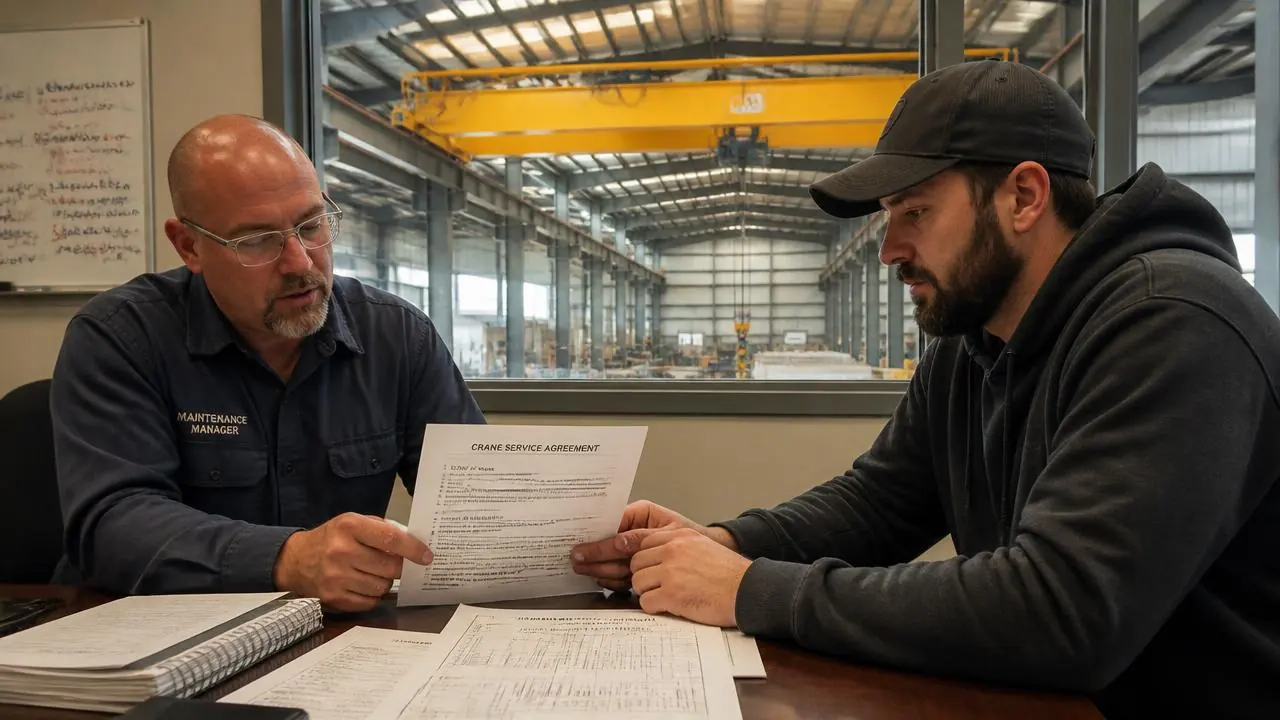
For many industrial facilities, renewing an overhead crane service agreement becomes routine.
The current provider knows the facility. Their technicians know the equipment. Pricing is familiar. Response times are established.
If the relationship is working reasonably well, renewing the agreement may seem like the obvious choice. And sometimes it is.
But contract renewal is also one of the best opportunities an owner has to step back and ask: is this service agreement actually producing the maintenance and reliability outcomes we need?
Price is important. So are coverage, technician availability and safety performance. Those should not be the only considerations.
Before renewing your next overhead crane service agreement, consider these ten questions.
1. Do we have a complete and accurate crane asset list?
It sounds basic, but many facilities do not maintain one reliable source of information for every crane and hoist.
An effective asset register should capture:
- location
- manufacturer
- capacity
- span
- serial number
- hoist information
- duty / service classification
- age
- operating environment
- criticality
- inspection history
- repair history
- modernization history
If the contractor's list and the owner's list do not match, the maintenance program begins with incomplete information. Building and maintaining that register is the foundation of crane asset management.
2. Are all cranes receiving the same maintenance frequency?
Not every crane has the same operating duty or production consequence.
A lightly used maintenance crane should not automatically be treated the same as a production crane operating continuously. Maintenance frequency should consider actual use, condition, environment, applicable requirements and operational risk.
The objective should be risk-based maintenance, not simply identical calendar intervals for every asset — the principle behind a properly structured preventive maintenance program.
3. What happens to inspection deficiencies after the report is issued?
Receiving the inspection report is only the beginning. Ask:
- Who reviews deficiencies?
- How are they prioritized?
- How quickly are critical items escalated?
- Who verifies completed repairs?
- Are recurring deficiencies identified?
- Can management see which issues remain open?
A 30-page inspection report sitting in a maintenance folder is not a deficiency-management program. Closing that loop is the work of an inspection program consultant.
4. Are we tracking repeat failures?
Repeated wheel problems. Repeated brake adjustments. Repeated contactor failures. Repeated conductor issues. Repeated wire-rope damage. Repeated radio problems.
Individual repair quotations can make each event appear isolated. Over time, the history may reveal a larger underlying issue.
A strong service program should make recurring problems visible.
5. Are major repairs competitively and technically reviewed?
Emergency work is different. If production is down, getting the crane operating safely may be the immediate priority.
But large planned repairs deserve greater scrutiny. Before approving significant expenditure, owners should understand:
- what failed
- why it failed
- whether the proposed scope corrects the root cause
- what alternatives exist
- whether modernization should be considered
- whether the crane's remaining lifecycle justifies the investment
Sometimes the best decision is to approve the supplier's proposal exactly as quoted. The value comes from knowing why — which is the purpose of an independent crane second opinion.
6. Does the contract address reliability or primarily activities?
There is an important difference between measuring number of inspections performed and measuring whether crane reliability is improving.
Useful performance indicators can include:
- unplanned downtime
- repeat failures
- emergency calls
- outstanding deficiencies
- repair backlog
- preventive-maintenance completion
- critical equipment availability
- maintenance cost by crane
- response time
Activity is easy to measure. Reliability is what the owner ultimately needs.
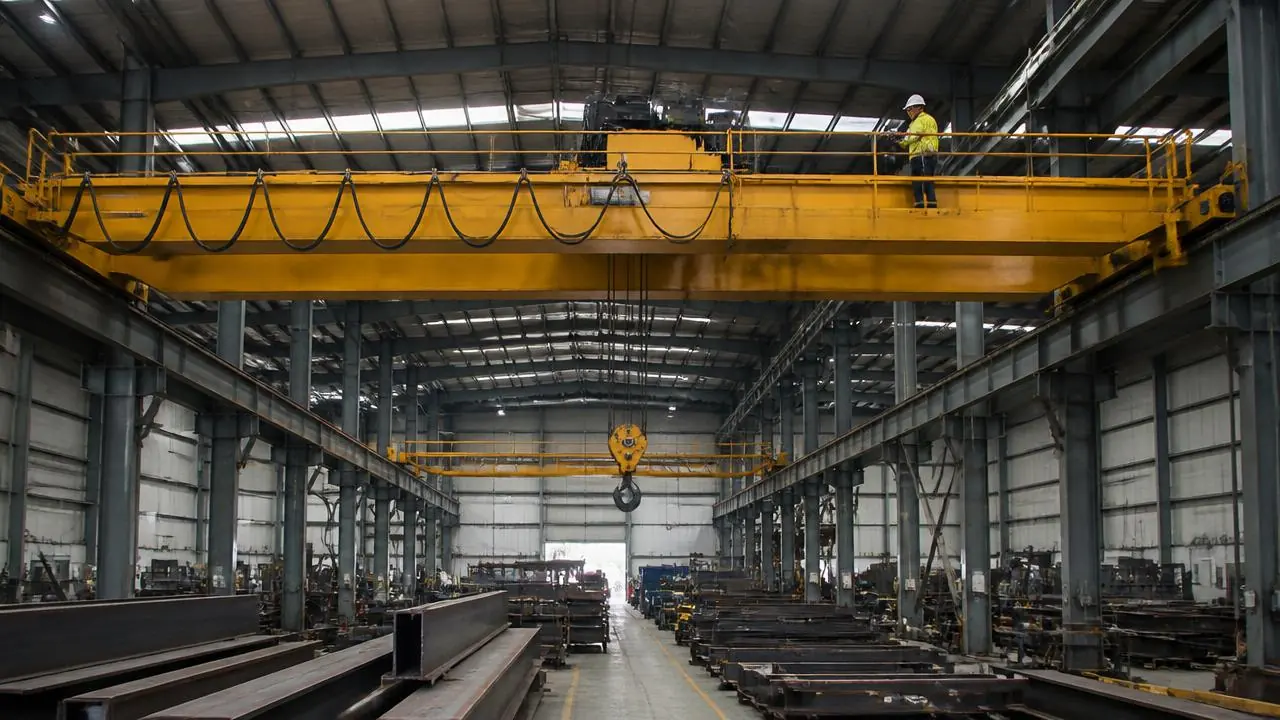
7. Do we know which cranes are critical?
If ten cranes fail tomorrow, which failure matters most?
Criticality should influence:
- maintenance frequency
- repair priority
- spare-parts inventory
- modernization planning
- emergency planning
- capital spending
Without an asset-criticality framework, maintenance resources can be distributed based primarily on whichever problem is currently loudest.
8. Do we have a critical spare-parts strategy?
Some crane components can be obtained quickly. Others may have long lead times or may already be obsolete.
For critical cranes, waiting weeks for:
- drives
- brakes
- radio controls
- contactors
- motors
- encoders
- current collectors
- specialized control boards
can create substantial production consequences.
A service-contract review is an ideal time to assess critical spare parts.
9. Are repair, modernization and replacement decisions connected?
A facility may spend significant money repairing an aging crane year after year without ever stepping back and evaluating total lifecycle cost.
The opposite can also occur. A replacement may be proposed when a focused modernization could extend useful life economically.
Major crane decisions should consider repair, modernize and replace as alternatives rather than disconnected events — the structure used in a repair or replace assessment.
10. Is the current provider still the right provider?
This does not mean automatically tendering the contract every year. Strong supplier relationships have real value.
A service provider that understands the facility, provides good technicians, responds quickly, works safely, communicates effectively, prices competitively and resolves problems should receive appropriate value for that performance.
But the decision should still be deliberate. Questions should include:
- Is pricing competitive?
- Is coverage sufficient?
- Are technician capabilities appropriate?
- Are reports useful?
- Is response time acceptable?
- Are deficiencies followed through?
- Are we receiving proactive recommendations?
- Are recurring failures being reduced?
- Does the supplier have the necessary geographic coverage?
- Is safety performance acceptable?
The best result may be renewing the incumbent. The objective is to know why they remain the best choice. Comparing scope and pricing on a common technical basis is the role of a crane service program consultant.
Independent review does not mean replacing your contractor
CAG's role is not to unnecessarily disrupt successful crane-service relationships.
An independent program review can help an owner determine:
- what the maintenance scope should include
- how providers should be evaluated
- whether inspection and preventive-maintenance frequencies are appropriate
- how deficiencies should be prioritized
- whether pricing and scope can be compared fairly
- how performance should be measured
- where modernization or capital planning is required
Where the question is which inspection edition and frequency actually applies to your equipment, start with which CSA B167 edition applies.
The selected service company continues performing the work. CAG helps ensure the owner remains in control of the strategy.
Before you sign the renewal
A crane service agreement can remain in place for years. That makes renewal an important decision point.
Before signing the next term, ask one simple question: are we renewing this contract because it is producing the best outcome — or simply because it is what we have always done?
A good incumbent provider should be able to withstand that evaluation. And if the answer confirms that the existing contractor remains the best choice, the owner can renew with greater confidence.
With 15+ years in the overhead crane and material handling industry, Bryan Whitty, Founder & Principal Consultant at Crane Advisory Group, reviews service scopes, equipment populations and contractor requirements from the owner's side of the table.
Related resources
FAQ
Frequently asked questions
- When should we review an overhead crane service contract?
- The most useful time is several months before the current term expires, while there is still room to correct scope, frequencies and performance measures before the renewal or tender is finalized. A review that begins after the renewal is signed can only influence the following term.
- Does reviewing the contract mean we have to change service providers?
- No. An independent review evaluates scope, frequency, deficiency management, reporting and pricing structure. In many cases the outcome is renewing the incumbent with a clearer scope and better performance measures. The objective is a deliberate decision, not an automatic tender.
- What should an overhead crane service agreement measure?
- Beyond activity counts such as inspections performed, a strong agreement measures outcomes: unplanned downtime, repeat failures, emergency calls, outstanding deficiencies, repair backlog, preventive-maintenance completion, critical crane availability, maintenance cost by asset and response time.
- Should every crane in the fleet receive the same maintenance frequency?
- Not usually. Frequency should reflect actual duty, operating hours, environment, condition, production criticality and applicable inspection requirements. Identical calendar intervals across a mixed fleet often over-maintain low-duty cranes while under-serving critical production equipment.
Related services
How CAG helps on this
Related industries
Industry pages worth reading next
More field notes
9 min · Maintenance
Who Should Define Your Overhead Crane Maintenance Scope — the Owner or the Service Contractor?
14 min · Maintenance
Motors, Gearboxes and Gearing: The Obsolete Parts That Keep Cranes Down for Weeks
9 min · Maintenance
Crane Service Contract vs. Crane Maintenance Program: What's the Difference?