Overhead Crane Modernization: Capacity Upgrades, Structural Reinforcement and What the Building Has to Do First
What an overhead crane capacity upgrade really requires — girder and runway reinforcement, rail replacement, runway alignment, span adjustment, concrete work and pony columns — and how to sequence and budget it.
How Crane Advisory Group Helps
Reading the standard is the easy part. Applying it to your cranes is the job.
Crane Advisory Group is an independent overhead crane and material handling consultancy led by Bryan Whitty, Founder & Principal Consultant, with 15+ years in the crane industry. We don't sell cranes, parts or service contracts — so what you get back is a recommendation, not a quote.
Compliance Gap Review
Where your maintenance, inspection and records program actually sits against the CSA B167 edition your province names — documented in writing.
Specs, Bids & Quotes Reviewed
Duty class, options, scope and exclusions checked before you sign — so you buy the crane or contract you need, not the one that was easiest to quote.
Independent Second Opinion
Repair, replace or modernize — reviewed by someone with no equipment, parts or service contract riding on the answer.
- In the overhead crane industry
- 15+ yrsIn the overhead crane industry
- Equipment, parts or service margin
- 0%Equipment, parts or service margin
- Standards referenced: CSA B167 · CMAA · ASME B30
- 3Standards referenced: CSA B167 · CMAA · ASME B30
- Scope and fee agreed before work starts
- FixedScope and fee agreed before work starts
Free download: CSA B167 Overhead Crane Compliance Checklist
A 5-page, vendor-neutral self-audit covering jurisdiction and edition, crane register, maintenance program, inspections and records, structure, electrical, training, modifications and vendor oversight. Enter your work email and the PDF opens immediately.
No newsletter spam. Every engagement follows the same documented review process.
See how an engagement worksA different cost structure than asking your crane supplier. Our work is advisory-only and scoped and quoted before it starts. There is no equipment margin, parts markup or service agreement attached to the advice — and a scoped review is a small line item next to the capital purchase, modernization or multi-year contract it is reviewing.
Almost every overhead crane modernization starts the same way: production needs a heavier lift, a faster cycle or a longer hook path, and someone asks whether the existing crane can be uprated. The honest answer is that the crane is usually the easy part. The hard part — and the part that decides whether the project is a $200k job or a $2M job — is everything the crane sits on.
This guide walks through the structural side of modernization: capacity upgrades, girder and runway reinforcement, rail replacement, runway alignment, span adjustment, concrete work and pony columns. It is the conversation we have with owners before a single vendor quote gets requested. If you have not yet decided whether to modernize at all, start with our repair or replace assessment and the modernization ROI breakdown.
The load path rules everything
An overhead crane capacity upgrade is not a crane change. It is a load path change. Add 10 tons at the hook and that load flows through:
hook and block → rope and drum → hoist frame and trolley → bridge girders → end trucks and wheels → runway rails → runway girders → brackets or columns → column base plates and anchors → foundations → soil.
Every element in that chain has to be checked. Upgrading a hoist without checking the runway girder is how owners end up with cracked welds two years later, and it is why a "simple" capacity increase is a structural engineering project, not a procurement exercise.
Step one: find the original design basis
Before anything else, establish what the structure was designed for. You need:
- Original crane data plate and general arrangement drawings (capacity, span, wheel loads, wheel base, bumper loads).
- Runway girder design drawings and, ideally, the original structural calculations.
- Building structural drawings — columns, brackets, bracing, base plates, anchor bolts.
- Foundation drawings and, where available, the geotechnical report.
- Current condition data: recent inspections, a runway survey, weld and rail condition.
When drawings do not exist — which is common on plants over thirty years old — the project needs a field measurement and structural assessment package before design can start. Budget for it. Skipping it means the engineer designs to assumptions, and conservative assumptions cost real money in steel.
Capacity upgrades: what actually governs
Three checks usually decide whether an uprate is feasible:
- Runway girder bending and shear under the new maximum wheel load, including impact allowance (CMAA typically 0.5% of speed per foot per minute, minimum 15% for the hoist load).
- Fatigue. This is the check owners forget. CMAA duty class and the number of load cycles govern allowable stress ranges at welded details. A girder that passes a static check can still fail fatigue if the plant is moving from Class C to Class E service.
- Lateral and longitudinal forces — the runway must take crane skew, trolley traverse and bridge acceleration/braking loads, transferred through brackets or bracing into the building frame.
If the girder fails, the options in ascending cost are:
- Reduce wheel load — go from four wheels to eight wheels per side on new end trucks. Frequently the cheapest fix, and often overlooked.
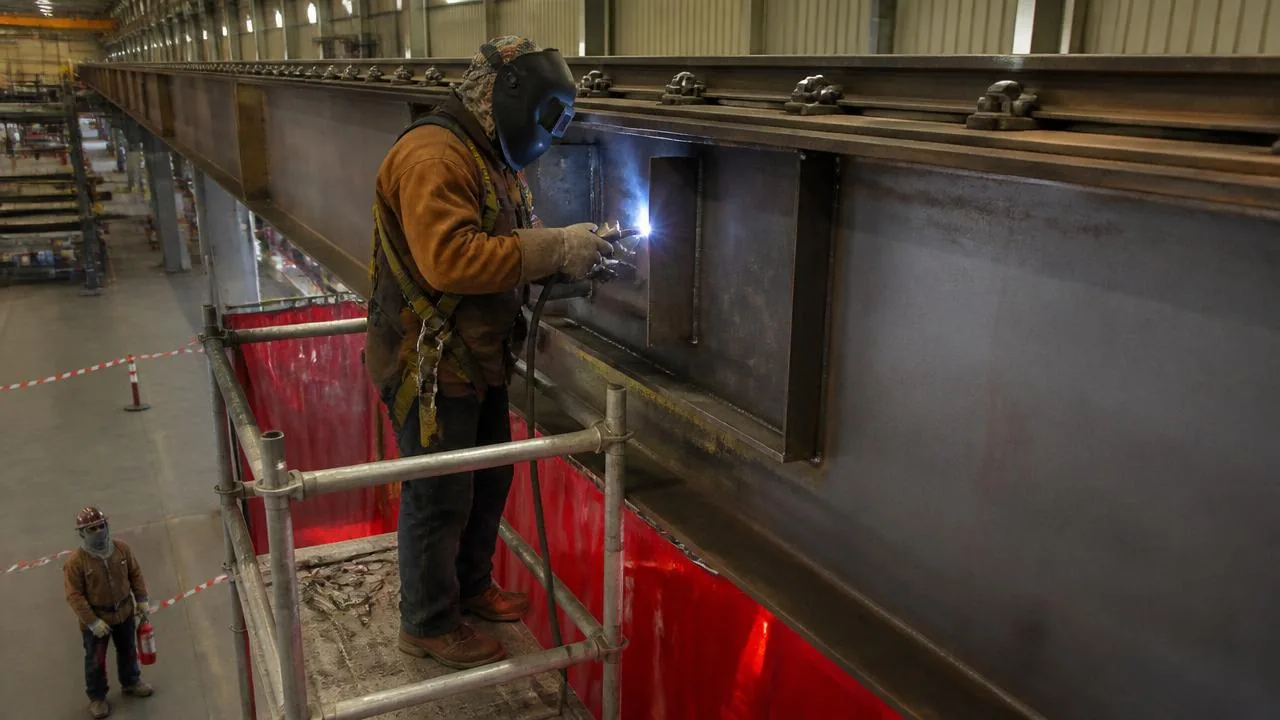
- Add cover plates or stiffeners to the existing girder — welded reinforcement, requires access, weld procedures and often heat-input control on older steel.
- Add a lower flange or knee bracing to improve lateral capacity.
- Replace the runway girder — the definitive fix, and often not much more than heavy reinforcement once access and downtime are priced.
Runway rail replacement
Rail is a consumable. On a capacity upgrade, existing rail almost never carries over, because:
- Higher wheel loads require a larger rail section (ASCE 85, ASCE 105, A100, A120 and up).
- Worn rail head, lipping or side wear is unacceptable under a heavier crane.
- Old rail is often welded down or clipped with obsolete hardware, and rigid welded rail traps thermal movement.
Best practice on replacement: new rail section sized to the new wheel load, floating rail clips (not welded rail), engineered rail pad where vibration or noise matters, proper joint gaps for thermal movement, and joints staggered away from column centrelines.
Runway alignment and span adjustment
A new or uprated crane on an out-of-tolerance runway inherits the wear problem immediately — and the warranty claim will be denied. Any modernization scope should include:
- A baseline runway survey before design. Span, straightness, elevation, cross-elevation and rail condition against CMAA 70/74 tolerances.
- Correction work — clip replacement, lateral rail shifting, shimming, or structural correction where the girders themselves have moved.
- A post-correction re-survey, signed off before the new crane is installed.
Span adjustment is its own category. Owners sometimes want to widen the span to gain hook coverage, or a new crane is built to a span the runway does not actually hold. Widening the effective span means moving one rail line outward — which changes girder eccentricity, bracket loading and column moments, and normally requires a full structural review. It is rarely a cheap change. The alternative, building the new crane's end trucks to accommodate the existing (imperfect) span, is usually the better engineering answer.
Columns, brackets and pony columns
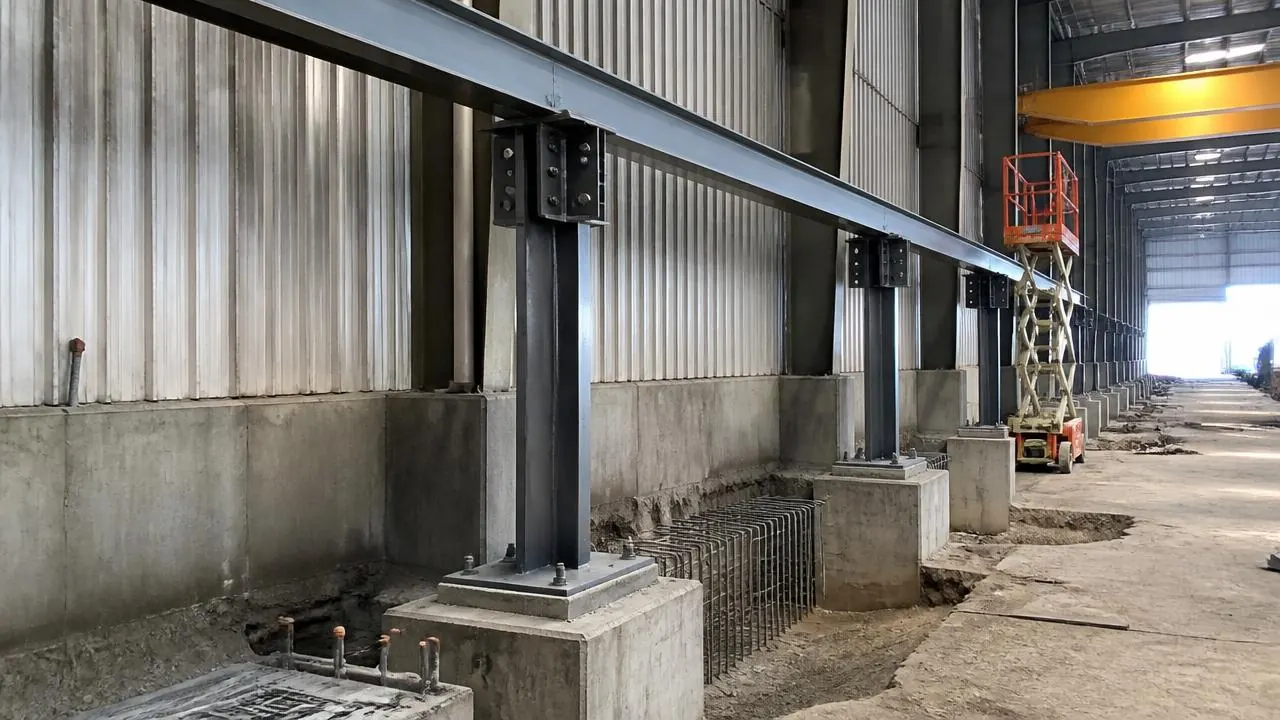
When the runway girder is fine but the supports are not, or when spans between existing columns are too long for the new load, the fix is often pony columns — intermediate columns added between existing building columns to shorten the runway girder span.
Pony columns are attractive because they:
- Cut runway girder bending moment dramatically (halving the span cuts moment roughly by four).
- Avoid touching the primary building frame.
- Can often be installed with limited production interruption.
They are not free. A pony column needs its own foundation, floor space, and a load path that does not conflict with equipment, aisles, drains or underground services. In many plants the floor congestion, not the structure, is what kills the option.
Where columns must stay put, the alternatives are bracket reinforcement, column strengthening (added plates, encasement, added bracing), or new independent crane columns that carry crane load separately from the building.
Concrete: the part people find last
Foundations are the most common late surprise in a capacity upgrade. Typical scope:
- Base plate and anchor bolt review — existing anchors are frequently undersized for the new uplift and shear, especially at end stops.
- Footing enlargement or new footings for pony columns or upgraded columns.
- Concrete encasement or jacketing of existing columns for added capacity.
- Slab reinforcement where new column loads land on a slab never designed for point loads.
- Geotechnical verification if the bearing pressure changes materially.
Concrete drives schedule as much as cost — cure times, excavation near live production, and permits. Get it into the plan early, not after the crane is ordered.
Also verify: bumpers, end stops and clearances
Capacity and speed changes affect bumper energy and end-stop design. A heavier, faster crane means more kinetic energy into the stop, and the stop transfers that into the girder end and the column. Check it. And confirm hook approach, headroom and clearance to building steel, lights, ductwork and piping — a taller new hoist can quietly lose you two feet of lift height.
The right sequence
The sequence that keeps modernization projects out of trouble:
- Condition assessment and document recovery.
- Runway survey (baseline).
- Structural assessment against the new load case, including fatigue.
- Define the structural remediation scope — girder, rail, columns, concrete.
- Write the crane technical specification with the confirmed wheel loads, span and duty class.
- Tender crane and structural work — with clear interface responsibility between the two.
- Execute structural work, re-survey, then install the crane.
- Load test and commission, and update the maintenance program.
The most expensive mistake is running that list backwards — buying the crane first, then discovering the runway cannot take it. We see it several times a year.
Where CAG fits
We are independent of crane builders, steel fabricators and installers. On a modernization we define the assessment scope, coordinate the structural engineer and surveyor, translate their findings into a costed remediation plan, write the crane and structural specifications, review the bids on a like-for-like basis, and hold the interface between the crane vendor and the structural contractor so neither can hand the problem to the other. See our crane modernization consulting and owner's representative services.
If you are considering a capacity upgrade, the single highest-value first step is a structural assessment and runway survey — before any vendor sees the enquiry.
FAQ
Frequently asked questions
- Can an existing overhead crane be upgraded to a higher capacity?
- Sometimes, but the governing constraint is rarely the crane. The bridge girders, end trucks, runway rails, runway girders, columns, base plates and foundations all have to be checked against the new wheel loads, including fatigue at the new duty class. A structural assessment is required before any capacity increase is committed.
- What structural work is typically needed for a crane capacity upgrade?
- Common scope includes runway girder reinforcement with cover plates or stiffeners (or full girder replacement), heavier runway rail with new clips, runway alignment correction, bracket or column strengthening, added pony columns, upgraded anchor bolts and base plates, and footing enlargement or new foundations.
- What is a pony column and when is one used?
- A pony column is an intermediate column added between existing building columns to shorten the runway girder span. Halving the span reduces bending moment roughly fourfold, so pony columns are often the most economical way to support a heavier crane without touching the primary building frame — provided floor space and a foundation location are available.
- Does a crane modernization require a runway survey?
- Yes. A baseline survey of span, straightness, elevation and cross-elevation against CMAA 70/74 tolerances should be done before design, corrections made as part of the structural scope, and a re-survey signed off before the new or upgraded crane is installed. Installing on an out-of-tolerance runway causes accelerated wheel and rail wear and typically voids warranty claims.
- Can the span of an existing crane runway be changed?
- Changing span means relocating a rail line, which alters girder eccentricity, bracket loads and column moments, and normally requires a full structural review plus concrete work. It is rarely economical. Building the new crane's end trucks to suit the existing measured span is usually the better answer.
- What is the correct order of work for a crane modernization project?
- Condition assessment and drawing recovery, runway survey, structural assessment against the new load case, define structural remediation, write the crane specification with confirmed wheel loads, tender crane and structural work with clear interface responsibility, execute structural work and re-survey, then install, load test and commission.
Related services
How CAG helps on this
overhead crane modernization consultant
Overhead Crane Modernization Consultant
Read moreoverhead crane repair or replace assessment
Overhead Crane Repair-or-Replace Assessment
Read moreoverhead crane specification review
Overhead Crane Specification Review
Read moreoverhead crane owner's representative
Owner's Representative — Overhead Crane Projects
Read moreoverhead crane capital planning consultant
Overhead Crane Capital Planning Consultant
Read more
Related industries
Industry pages worth reading next
More field notes
13 min · Overhead Crane
Overhead Crane Modernization Project Timeline: From Planning to Final Inspection
10 min · Overhead Crane
Crane Runway Rail Alignment: The Hidden Cause of Wheel, Rail and Structural Wear
14 min · Maintenance
Motors, Gearboxes and Gearing: The Obsolete Parts That Keep Cranes Down for Weeks