CMAA Service Class Explained: Class A Through F, and Why It Decides Your Crane's Life
A plain-language guide to CMAA service classes A through F — what each one means, how to pick the right one, and why mis-classification is the most expensive mistake owners make on new cranes.
The single line item on a crane specification that has the biggest downstream impact is the CMAA service class. Get it right and the crane runs for 30–40 years with routine maintenance. Get it wrong and you pay for it every year, twice — once in maintenance, once in early replacement.
What CMAA service class actually is
The Crane Manufacturers Association of America (CMAA) publishes Specifications 70 (top-running double-girder) and 74 (top-running single-girder) that classify overhead cranes into six service classes — A through F — based on load spectrum and number of load cycles. The class drives structural design, mechanical component sizing, brake sizing, wheel selection, and expected fatigue life.
The six classes, in plain language
Class A — Standby / infrequent. A powerhouse crane that lifts a generator rotor once every ten years. Design is dominated by rated load, not fatigue.
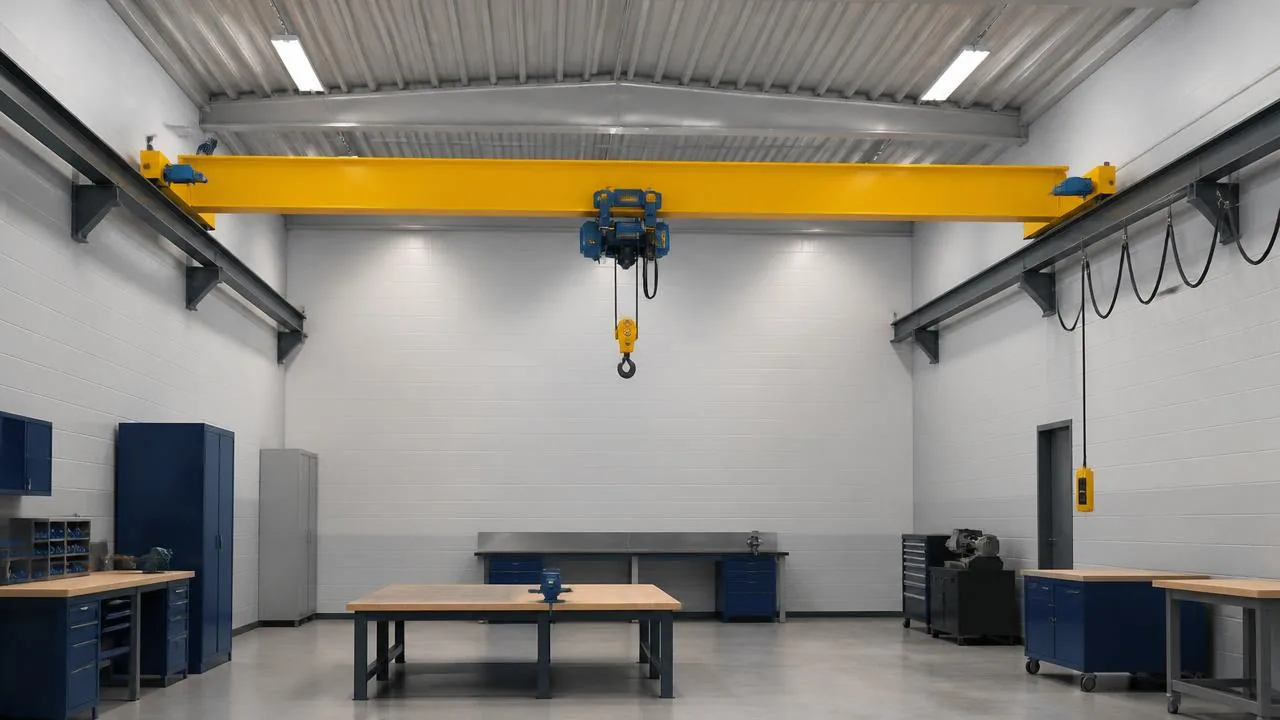
Class B — Light service. Repair shops, light assembly. Under 5 lifts per hour at less than 50 percent of rated load on average.
Class C — Moderate service. General manufacturing, paper-mill maintenance. Under 10 lifts per hour, average load around 50 percent of rated.
Class D — Heavy service. Steel warehousing, container yards, general fabrication. Under 20 lifts per hour, average load 65 percent of rated. This is where most industrial cranes actually live.
Class E — Severe service. Cement mills, scrap yards, container terminals in continuous production. 20+ lifts per hour, average load near rated.
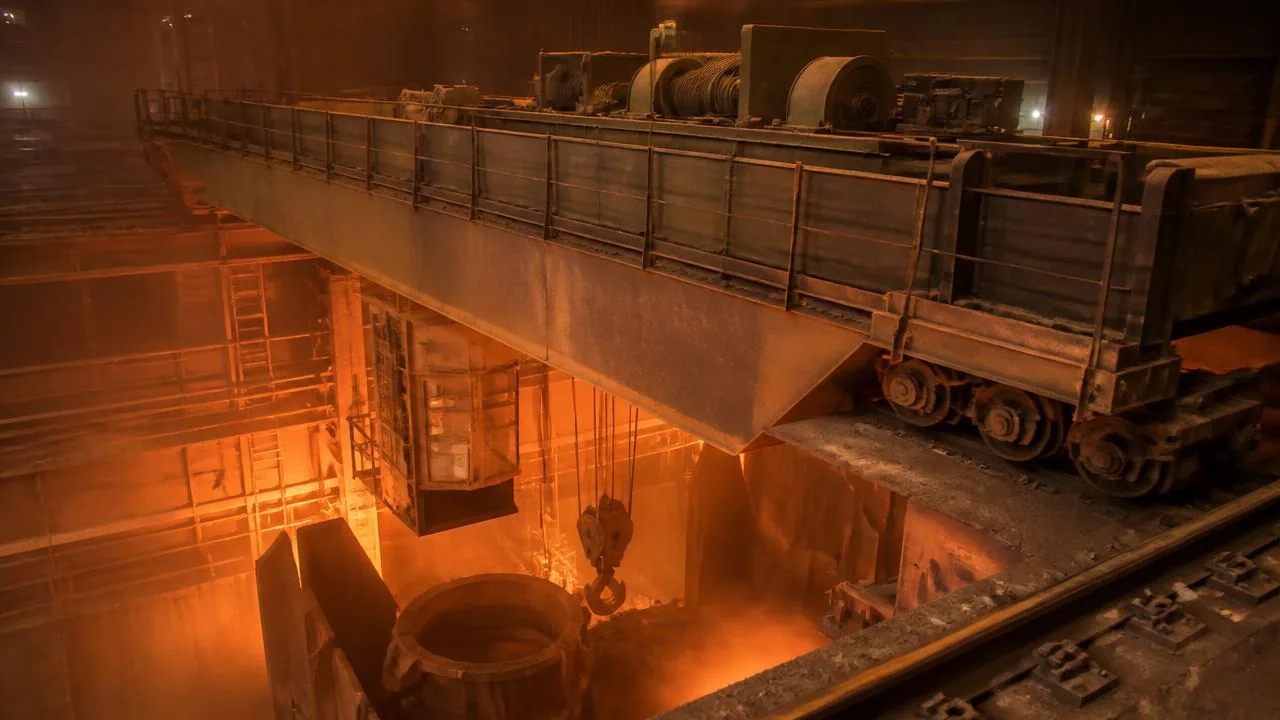
Class F — Continuous severe service. Ladle cranes, coil-handling in a hot mill, bulk-handling grabs. Continuous cycling near rated load. The most expensive and most demanding class.
Why mis-classification is the most expensive mistake
The default failure mode is buying a Class C crane and running it at Class D or E duty. It fits the budget, it works on day one, and then the wheels wear out at year three instead of year fifteen, the gearboxes go at year five, and the bridge structure enters fatigue-driven replacement territory a decade early. The savings on the original purchase are eaten several times over in unplanned maintenance and early replacement capital.
How to pick the right class
Class is not a number you copy from the last crane you bought. It's a calculation based on load spectrum (what fraction of rated load you lift, and how often) and load cycles (total number of lifts over service life). The right way to do it:
- Instrument the existing crane or process for a representative period.
- Build a load-spectrum histogram.
- Multiply by cycles per hour × operating hours per year × service life target.
- Cross-reference against CMAA 70 Table 2.2 or CMAA 74 equivalent.
Owners almost never do this. Suppliers copy the last spec. That's how mis-classification propagates.
Independent review pays for itself here
This is one of the highest-value inputs an independent crane consultant provides. Half a day of duty-cycle work at the front end of a specification can shift a crane one or two classes up — the cost delta is small, the life-cycle delta is enormous.
Related reading: heavy-duty crane duty, coating and hazardous-area specifications.
FAQ
Frequently asked questions
- What is a CMAA service class?
- A classification (A through F) describing the expected duty and load spectrum of a crane. It drives structural and mechanical sizing and, in turn, expected component life.
- What happens if a crane is under-classified?
- Components wear out faster than the maintenance program expects, downtime rises, and the owner pays repeatedly for a shortfall that was set at the specification stage.
- How do CMAA classes relate to CSA B167 or ASME B30?
- CMAA addresses crane design classification, ASME B30 addresses safe operation and inspection in the United States, and CSA B167 addresses design, inspection, maintenance and safe operation in Canada. Programs typically reference the combination that applies to the site.
Related services
How CAG helps on this
Related industries
Industry pages worth reading next
More field notes
7 min · Procurement
Crane Procurement Spec Checklist: Twelve Clauses to Add Before You Release to Bid
6 min · Specification
Five Overhead Crane Specification Mistakes That Cost Owners the Most
6 min · Asset Management
Overhead Crane Asset Management in Mining, Steel and Refining: Who Is Actually Managing the Fleet?