Teck's Highland Valley Copper Mine Life Extension: What Canada's Largest Copper Mine Means for Material Handling
Teck approved construction of the Highland Valley Copper Mine Life Extension in July 2025, extending the life of Canada's largest copper mine. Here is why the project matters and what it implies for concentrator crane and hoist planning.
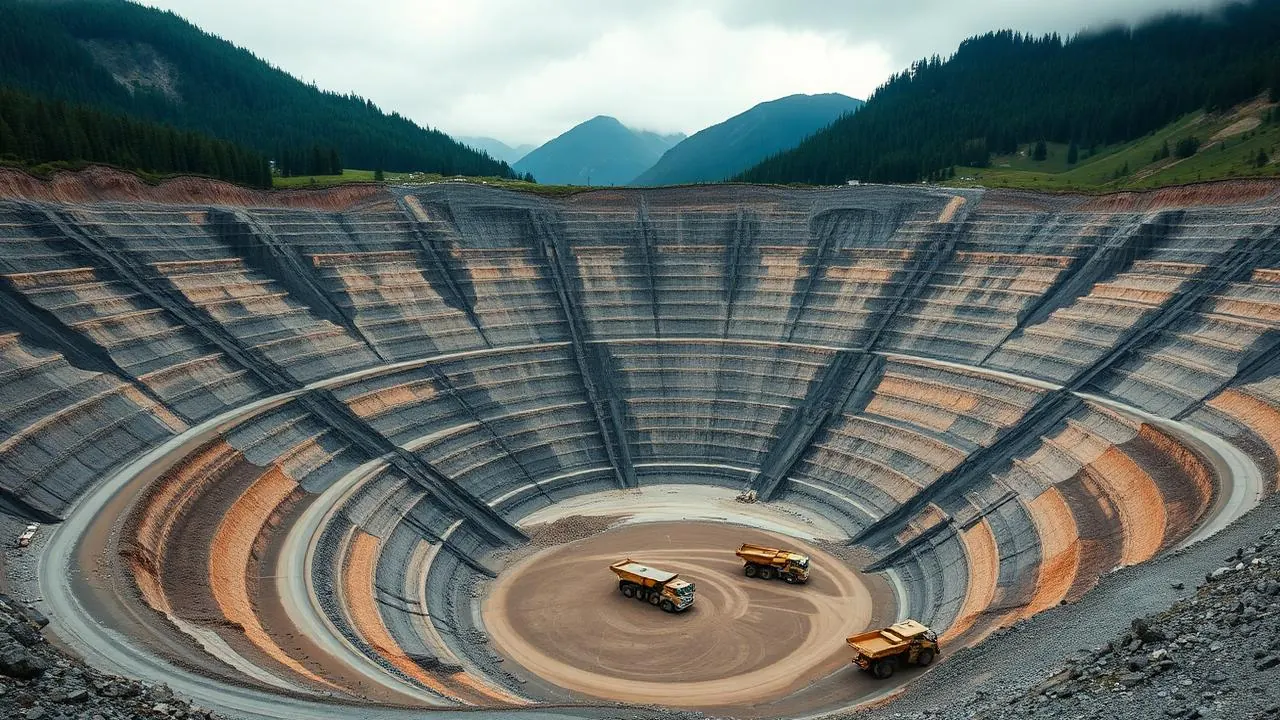
In July 2025, Teck Resources announced board approval to proceed with construction of the Highland Valley Copper Mine Life Extension (HVC MLE) — a decision that keeps Canada's largest copper mine producing well into the 2040s.
It followed the B.C. government issuing an Environmental Assessment Certificate for the project in June 2025, and provincial permitting later that year.
Sources: Teck news release, July 23, 2025 and the HVC MLE project page.
Why this is a national milestone
Copper is the bottleneck metal for electrification. Transmission, transformers, motors, EVs and grid storage all depend on it, and new copper supply is difficult to permit anywhere in the world.
HVC MLE is a brownfield extension of an operating asset located near Logan Lake, B.C. Rather than opening a new mine, it extends the existing pit and expands supporting infrastructure — which is generally the fastest and lowest-impact way to add supply.
For Canada, the significance is straightforward:
- It secures a long-term domestic source of a designated critical mineral.
- It sustains skilled employment and Indigenous and regional economic participation in the B.C. Interior.
- It signals to global capital that large mining investments can still reach a construction decision in Canada.
What a longer mine life changes technically
A mine life extension is not just an ore-body decision. It resets the asset management horizon for every piece of fixed plant on site.
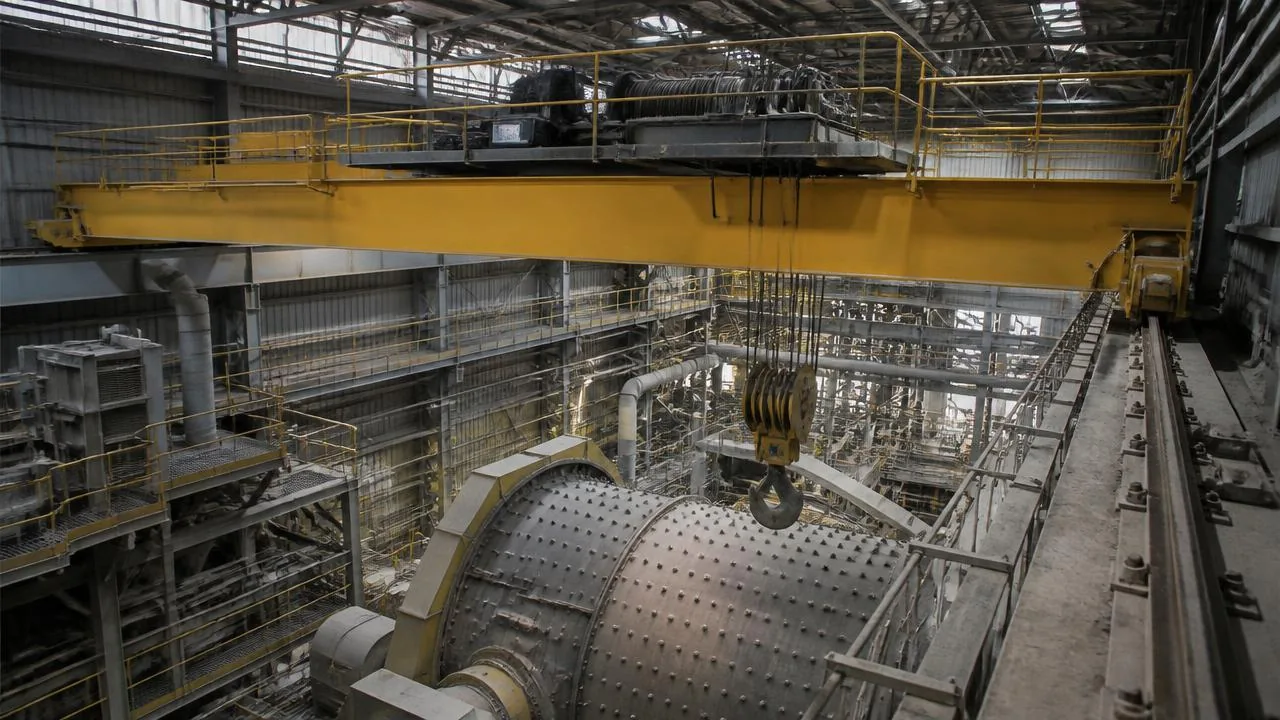
Concentrator buildings, crusher structures, mill maintenance bays, electrical rooms and shops all contain overhead cranes and hoists that were originally specified for the *previous* mine life. When the horizon moves out by another two decades, three questions become urgent.
1. Was the crane specified for the duty it is now expected to perform?
Mill maintenance cranes are frequently classified on installed capacity rather than actual cycles. A crane specified as "heavy duty" without a defined CMAA class, load spectrum and cycle count may already be operating beyond its design service life — and now has to run for another twenty years.
2. Can the crane still do the heaviest planned lift, safely?
Mill relines, gearbox changes, motor swaps and pump removals define the real design lift. If the extension changes equipment sizes, the governing lift may have quietly increased. Capacity, hook approach and headroom all need to be re-checked against the new maintenance plan, not the original one.
3. Is modernization cheaper than replacement?
Structurally sound bridges often justify a control, drive, brake and hoist upgrade rather than full replacement. That decision needs an engineering basis, not a supplier quotation.
The maintenance program question
Remote B.C. mine sites carry high downtime cost and long parts lead times. A concentrator crane that fails during a scheduled reline does not delay one shift — it delays the entire outage.
A defensible program on a life-extended asset generally includes:
- A complete crane and hoist register with duty classification per unit
- Inspection frequencies aligned to actual use, per CSA B167 as adopted by the applicable jurisdiction
- Critical spare parts held on site: brakes, rope, rope guides, contactors, drives
- A documented repair-versus-replace threshold for each major unit
- Capital forecasting tied to the new mine life, not the old one
See our guidance on preventive maintenance programs and repair-or-replace assessments.
The independent view
Mine operators receive crane recommendations from the supplier who services the site. That supplier sells a product line and a service contract. Our role is different: we assess whether the equipment matches the duty and the new asset horizon, and we compare options across any manufacturer.
For projects the size of a mine life extension, that separation between "what is being sold" and "what the operation requires" is worth having on the record.
Sources & attribution
Public announcements referenced
Financial results, milestones and expansion details in this article are drawn from each organization's own public announcements. Credit and links go to the source. Crane Advisory Group is independent and is not affiliated with, endorsed by, or speaking for these organizations.
Teck Resources Limited
Teck announces construction of Highland Valley Copper Mine Life Extension to proceedAnnounced July 23, 2025
Teck Resources Limited on LinkedInTeck Resources Limited
HVC Mine Life Extension Project overviewTeck Resources Limited on LinkedIn
FAQ
Frequently asked questions
- When was the Highland Valley Copper Mine Life Extension approved?
- Teck announced board approval for construction on July 23, 2025, following the issuance of a B.C. Environmental Assessment Certificate in June 2025 and subsequent provincial permits.
- Why does a mine life extension affect overhead crane planning?
- Fixed plant cranes in concentrators, crusher buildings and maintenance shops were specified for the original mine life. Extending the operation resets the asset management horizon, so duty classification, governing lift capacity, modernization decisions and spare parts strategy all need to be re-evaluated.
- Should a mine modernize or replace an aging concentrator crane?
- It depends on structural condition, remaining fatigue life and the governing maintenance lift. A structurally sound bridge often justifies a drive, control, brake and hoist upgrade, but that should be established through an independent engineering assessment rather than a supplier quotation.
Related services
How CAG helps on this
More field notes
6 min · Asset Management
Overhead Crane Asset Management in Mining, Steel and Refining: Who Is Actually Managing the Fleet?
7 min · Compliance
B.C.'s New Crane Licensing and Permitting Program: What It Means for Overhead Crane Owners
6 min · Mining
Newmont's Canadian Gold Portfolio: What Ownership Change Means for Crane Asset Management