Why Canada's EPCs and General Contractors Are the Backbone of Our Industrial Future
Canada's energy, mining and power projects only exist because EPC firms and general contractors turn approvals into operating plants. Here is why their work matters — and where material handling decisions quietly determine 30-year outcomes.
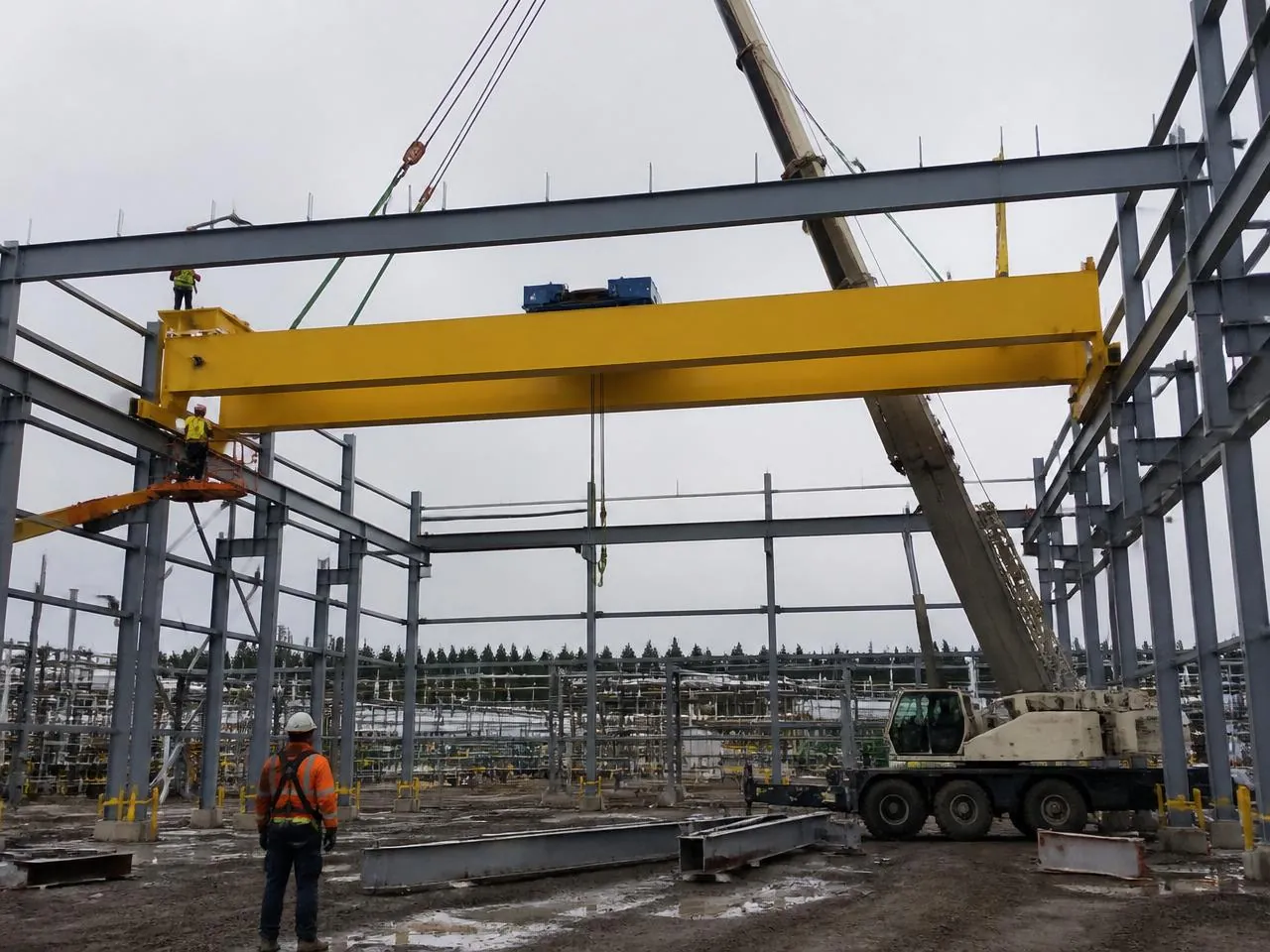
Canada does not build things in boardrooms. It builds them through the engineering, procurement and construction community — the firms that take a regulatory approval and turn it into an operating plant, mine or generating station.
Kiewit, Worley, PCL, Wood, Hatch, Fluor, AECOM, AtkinsRéalis and the utilities and Crown corporations they work alongside — OPG, BC Hydro, Manitoba Hydro, Candu Energy — carry a responsibility that is easy to overlook. Every megawatt of clean power, every tonne of copper concentrate and every barrel of low-sulphur diesel produced in this country passes through infrastructure that one of these organizations designed, procured or built.
What EPC delivery actually protects
An EPC contract is a risk transfer. The owner is buying certainty: a facility that starts up on a date, performs to a nameplate, and can be maintained safely for decades. To deliver that, the EPC team has to make thousands of technical decisions long before anyone turns a valve.
Most of those decisions are invisible once the plant is running. A few of them are permanent.
Fixed equipment sizing, structural steel, electrical classification and material handling all fall in the permanent category. They are set during engineering, locked at procurement, and extremely expensive to revisit after mechanical completion.
Where material handling gets under-specified
Overhead cranes and hoists are rarely on the critical path during early engineering. They are a line item inside a building package — often written in a single paragraph and passed to procurement.
That paragraph then travels a long way:
- Owner requirements go to the EPC.
- The EPC issues a building or process package.
- The general contractor tenders the mechanical scope.
- A crane supplier quotes what the document literally asked for.
Nobody in that chain is acting improperly. But if the original paragraph did not define duty class, environment, service life, maintenance access and future capacity, the crane that arrives will meet the specification and still be wrong for the operation.
The three gaps we see most often on Canadian projects
| Gap | What the RFQ says | What the plant actually needs |
|---|---|---|
| Duty class | "Heavy duty" | Defined CMAA class based on real cycles, load spectrum and shift pattern |
| Environment | "Manufacturer's standard paint" | A coating system matched to humidity, chlorides, dust, chemical exposure and washdown |
| Hazardous area | "Explosion-proof crane" | The specific Class, Division/Zone, gas group and temperature code from the area classification drawing |
Each of these gaps produces the same outcome: a change order during commissioning, or a reliability problem that shows up in year three.

Why an independent review helps the EPC, not just the owner
A crane supplier sells the product line they carry. That is their business and there is nothing wrong with it. But it means the technical recommendation an owner receives is bounded by one manufacturer's catalogue.
An independent review does something different. It starts with the duty, the environment and the production requirement, then compares options across any OEM. On an EPC-delivered project that helps in three practical ways:
- Cleaner bid comparison. When every bidder is priced against the same clearly defined duty and environment, the low bid is actually the low bid.
- Fewer commissioning surprises. Area classification, access and maintainability get resolved on paper instead of on site.
- A defensible record. Owners with governance requirements — utilities, Crown corporations, publicly traded miners — can show why a selection was made.
Built for large-site governance
Crane Advisory Group's advisory model is designed for the scale and documentation standards common to major Canadian EPC and general contracting programs, and to owners in mining, oil sands, petrochemical, power generation and municipal infrastructure across Ontario, Manitoba, Saskatchewan, Alberta and British Columbia.
We do not sell equipment. We review what is being specified, what is being quoted and whether the two match what the facility will actually demand over a 30-year life.
If you are scoping material handling on a Canadian industrial project, a specification review or independent bid review early in engineering is the cheapest risk reduction available.
Sources & attribution
Public announcements referenced
Financial results, milestones and expansion details in this article are drawn from each organization's own public announcements. Credit and links go to the source. Crane Advisory Group is independent and is not affiliated with, endorsed by, or speaking for these organizations.
Teck Resources Limited
Teck announces construction of Highland Valley Copper Mine Life Extension to proceedAnnounced July 23, 2025
Teck Resources Limited on LinkedInInter Pipeline
Heartland Petrochemical Complex project updatesInter Pipeline on LinkedInNorth West Redwater Partnership
Sturgeon Refinery project and operations informationNorth West Redwater Partnership on LinkedIn
FAQ
Frequently asked questions
- Why does material handling get under-specified on large EPC projects?
- Overhead cranes are usually a small line item inside a much larger building or process package. The requirement is written early, passed through several parties, and quoted literally by the supplier. If duty class, environment and hazardous-area details were not defined at the start, no one downstream adds them.
- Does an independent crane review slow down an EPC schedule?
- It usually does the opposite. Resolving duty class, coatings and area classification during engineering prevents change orders and rework at commissioning, which is where crane issues normally surface on Canadian megaprojects.
- Who typically engages an independent overhead crane consultant?
- Owners, owner's engineers, EPC and EPCM teams, and general contractors. The engagement is usually triggered by a specification package, a bid evaluation, or a dispute over whether delivered equipment matches what was purchased.
Related services
How CAG helps on this
Related industries
Industry pages worth reading next
More field notes
6 min · Asset Management
Overhead Crane Asset Management in Mining, Steel and Refining: Who Is Actually Managing the Fleet?
9 min · Maintenance
Who Should Define Your Overhead Crane Maintenance Scope — the Owner or the Service Contractor?
10 min · Service Contracts
Before You Renew Your Crane Service Contract: 10 Questions Owners Should Ask