Crane Modernization ROI: Where the Payback Actually Comes From
Breaking down the real ROI drivers of an overhead crane modernization — from VFD retrofits to radio remote controls — and where owners consistently over- and under-estimate returns.
How Crane Advisory Group Helps
Reading the standard is the easy part. Applying it to your cranes is the job.
Crane Advisory Group is an independent overhead crane and material handling consultancy led by Bryan Whitty, Founder & Principal Consultant, with 15+ years in the crane industry. We don't sell cranes, parts or service contracts — so what you get back is a recommendation, not a quote.
Compliance Gap Review
Where your maintenance, inspection and records program actually sits against the CSA B167 edition your province names — documented in writing.
Specs, Bids & Quotes Reviewed
Duty class, options, scope and exclusions checked before you sign — so you buy the crane or contract you need, not the one that was easiest to quote.
Independent Second Opinion
Repair, replace or modernize — reviewed by someone with no equipment, parts or service contract riding on the answer.
- In the overhead crane industry
- 15+ yrsIn the overhead crane industry
- Equipment, parts or service margin
- 0%Equipment, parts or service margin
- Standards referenced: CSA B167 · CMAA · ASME B30
- 3Standards referenced: CSA B167 · CMAA · ASME B30
- Scope and fee agreed before work starts
- FixedScope and fee agreed before work starts
Free download: CSA B167 Overhead Crane Compliance Checklist
A 5-page, vendor-neutral self-audit covering jurisdiction and edition, crane register, maintenance program, inspections and records, structure, electrical, training, modifications and vendor oversight. Enter your work email and the PDF opens immediately.
No newsletter spam. Every engagement follows the same documented review process.
See how an engagement worksA different cost structure than asking your crane supplier. Our work is advisory-only and scoped and quoted before it starts. There is no equipment margin, parts markup or service agreement attached to the advice — and a scoped review is a small line item next to the capital purchase, modernization or multi-year contract it is reviewing.
Crane modernizations get sold on control upgrades and shiny pendants. The ROI actually comes from four places, and most business cases capture only one or two.
1. Availability, not speed
Modern VFD controls, condition monitoring and predictive maintenance reduce unplanned downtime. On a production-critical crane, a two-percent availability gain often outweighs every other benefit combined. Model this first.
2. Component life extension
Soft-start VFDs eliminate the shock loading that kills wheels, gearboxes and brakes. On heavy-duty cranes we routinely see wheel life double after a controls modernization. That's a real annual maintenance line item, not a rounding error.
3. Operator productivity
Radio remote controls and variable-speed hoisting cut cycle times 10–20 percent on typical duty. On a bottleneck crane in a production line, that's throughput — which is revenue, not cost savings.
4. Safety and insurance
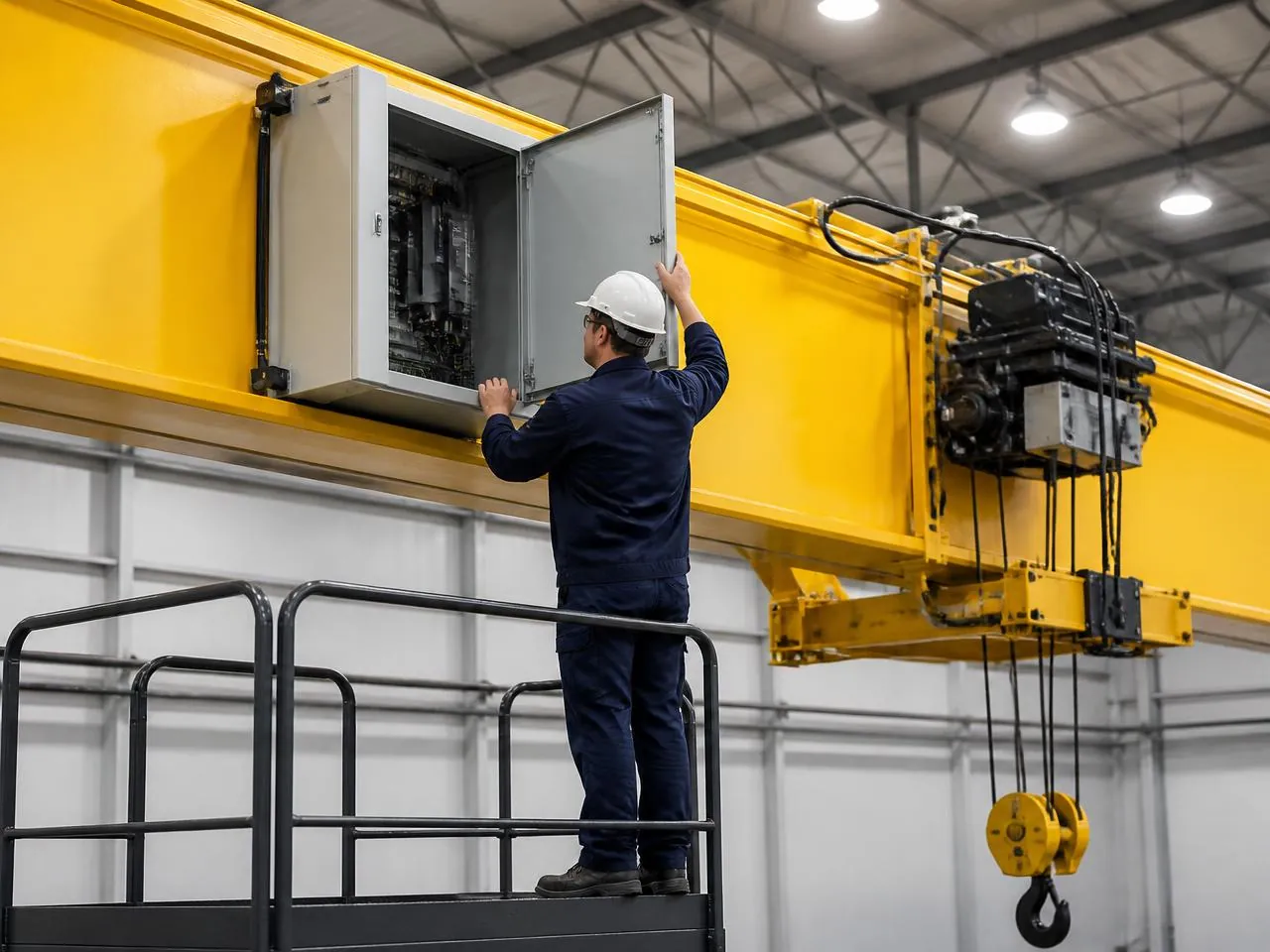
Anti-collision, sway control, load-limit interlocks and event logging reduce incident rates. Insurance premiums don't always drop immediately, but incident cost avoidance is real and quantifiable.
Where owners get the numbers wrong
- Overestimating speed gains. Faster hoisting rarely translates to faster cycles — the constraint is usually rigging, spotting or hand signals.
- Underestimating downtime savings. Owners count last year's outages and stop there. A properly instrumented modernized crane surfaces problems before they become outages.
- Ignoring parts obsolescence. If the drive family is being sunset, the "do nothing" baseline is not stable — it's a stranded asset in 3–5 years.
Build the case properly
Any modernization business case worth funding models availability, component life, productivity and safety separately, over a ten-year horizon, with a stated do-nothing baseline. If your OEM's proposal shows one lump-sum "savings" number, it's a quote, not a business case.
FAQ
Frequently asked questions
- What returns does crane modernization typically deliver?
- Reduced unplanned downtime, improved positioning and cycle time, better parts availability, improved safety device capability, and extended service life without structural replacement.
- How is modernization ROI calculated?
- Quantify downtime hours avoided, maintenance labour and parts reduction, and production throughput gain, then compare against project cost and outage duration.
- How long does a modernization outage take?
- It depends on scope — control-only upgrades are typically short, while hoist machinery or structural work extends the outage. Long-lead components usually govern the schedule more than site work.
Related services
How CAG helps on this
Related industries
Industry pages worth reading next
More field notes
14 min · Maintenance
Motors, Gearboxes and Gearing: The Obsolete Parts That Keep Cranes Down for Weeks
6 min · Overhead Crane
Could New Crane Technology Solve the Problem Without Replacing the Crane?
6 min · Modernization
Crane Modifications in Canada: When an Upgrade Can Trigger Engineering and Documentation Requirements