Water Weights and Unique Group: The Modern Standard for Overhead Crane Load Testing
How water-filled proof load bags — pioneered by Water Weights® and now supplied globally by Unique Group — became the safest and most practical way to load test overhead cranes, davits and hoists.
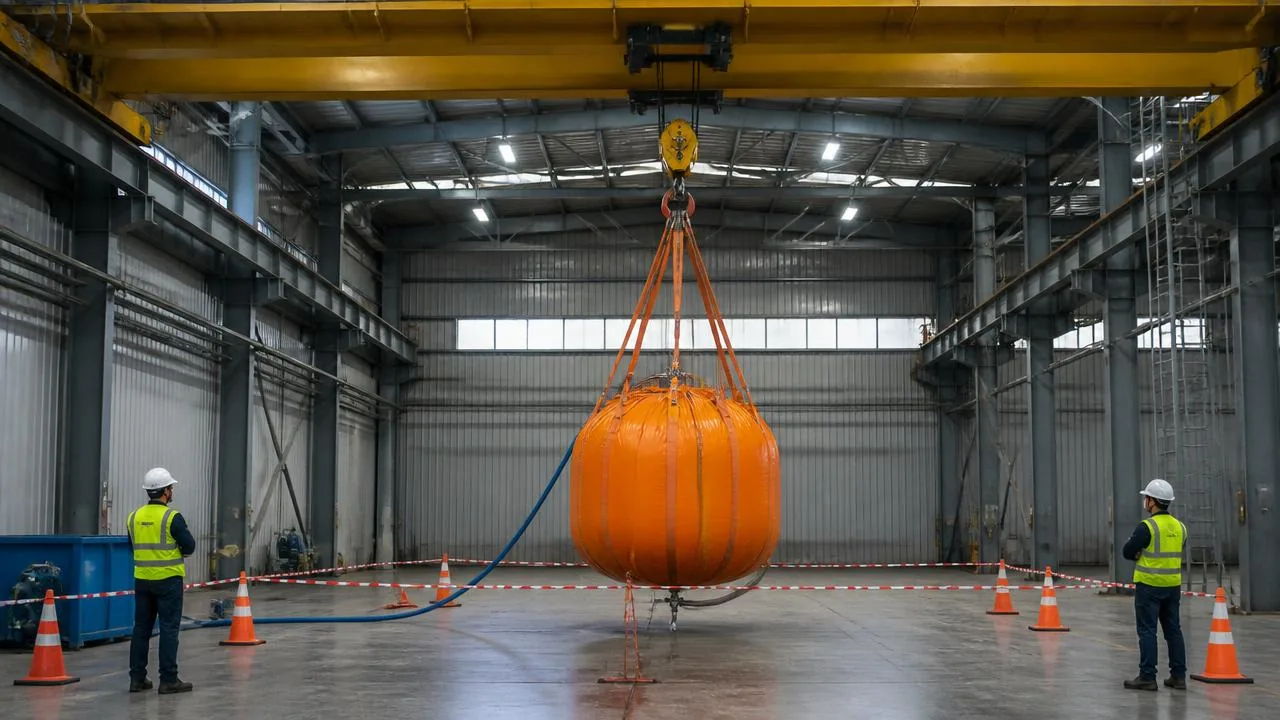
For decades, overhead crane load tests meant stacking cast-iron blocks, filling steel skips with scrap or dragging concrete kentledge into a plant. It was slow, expensive, and — every time that mass was suspended overhead — dangerous. Water weights changed that.
This post explains what water weights are, why Water Weights® and its parent Unique Group became the reference name in the industry, and how they fit into a modern overhead crane load test and commissioning program.
What water weights actually are
A water weight is a purpose-built, high-strength fabric bag with a rated lifting point, fill/drain fittings and a calibrated flow meter. The bag is rigged to the crane hook empty, then filled in place from a plant water source. Water is dense, cheap, abundant, and — critically — its weight is precisely known: 1,000 kg per cubic metre at 4 °C, corrected for temperature.
Bag sizes typically run from 1 t through 35 t individually, and can be combined in banks to test cranes above 500 t. Because the load is built up incrementally, the crane structure, brakes and controls see a controlled ramp instead of a sudden shock.
Why it beats solid weights
- Safety — a bag that fails drops water, not a multi-ton block. The bag is filled below the crane, then lifted; solid weights have to be moved into position by another crane or by forklift, creating a second lifting hazard.
- Accuracy — the fill volume is metered. Test values of 100%, 110% and 125% of rated capacity are hit exactly, with a certified traceable report — the exact evidence CSA B167, ASME B30 and OSHA require.
- Logistics — no truckloads of kentledge, no crane-to-crane transfers, no permits to move heavy loads through the plant. Bags fold flat and ship by van or air freight.
- Access — bags fit in low-headroom bays, under mezzanines, on offshore platforms and in nuclear buildings where solid loads simply cannot be assembled.
- Cost — for cranes above ~5 t, water weights are almost always cheaper on a total-installed basis than sourcing, transporting and rigging equivalent solid mass.
Where Water Weights® and Unique Group fit in
Water Weights® is the original branded solution — the product name is used across the industry the way "Kleenex" is used for tissues. It is now part of Unique Group, a global subsea and buoyancy engineering company. Under Unique Group, the Water Weights® line has expanded into a full crane load testing service offering:
- Proof load testing bags from 1 t to 35 t individually, combinable into banks well beyond 500 t.
- Load cells, MRT (magnetic rope testing) inspection, load monitoring systems and rigging accessories.
- Turnkey testing crews that mobilize globally — including one publicly documented 8-ton Konecranes overhead crane test at a California municipal water production facility in 2025.
- Sale and rental models — most owners rent, but high-utilization inspection firms and shipyards often buy.
Unique Group's own technical library (see their articles *Understanding Water Weights Load Testing Solution and its Benefits* and *Tailoring Load Testing Solutions to Specific Requirements*) is a good primer if you want to go deeper on the product side.
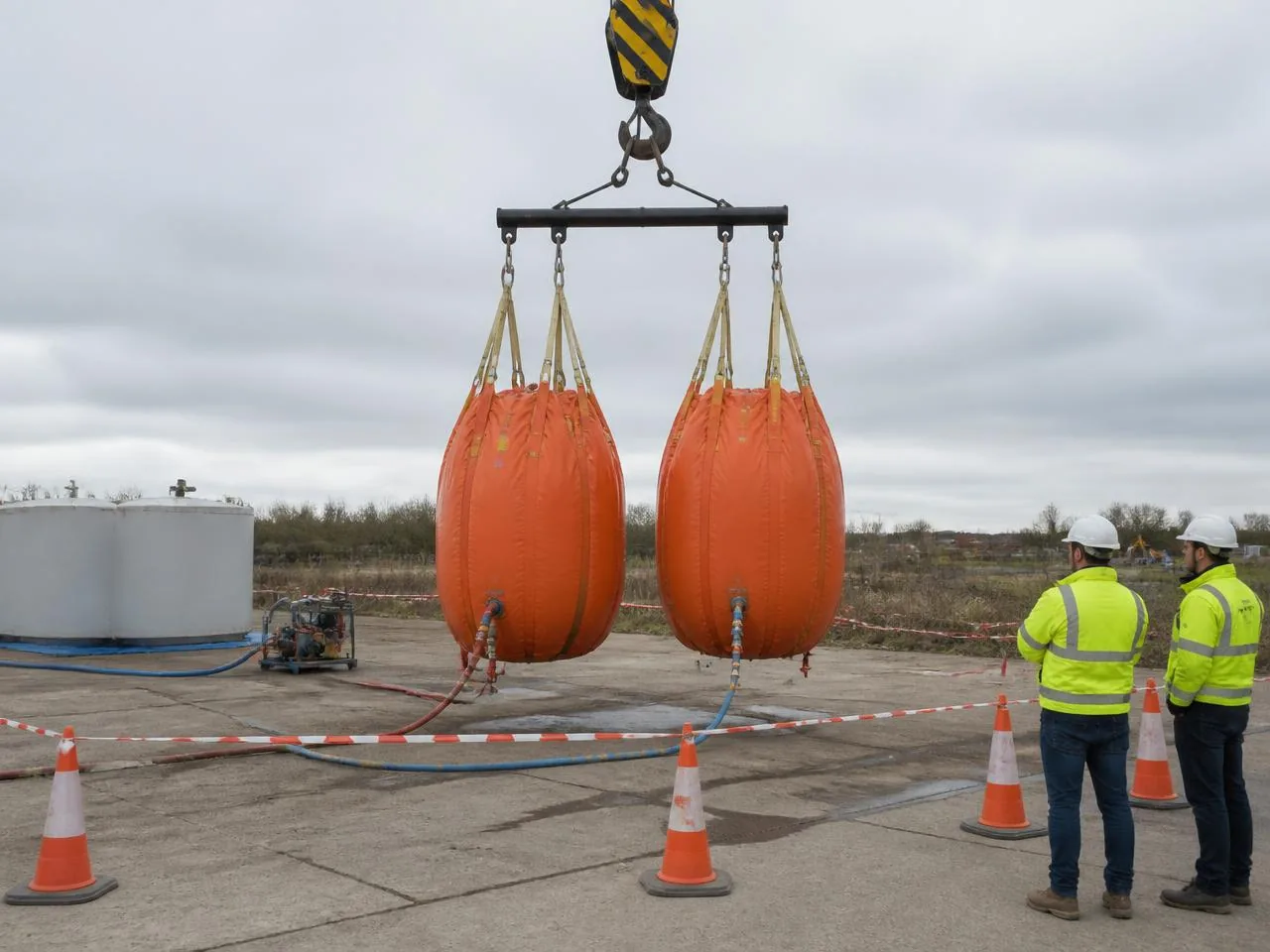
When water weights are the right tool
- New overhead crane commissioning at 100% and 125% of rated capacity per CSA B167 or ASME B30.2/B30.17.
- Post-modernization proof tests after a hoist replacement, VFD retrofit or structural repair.
- Periodic re-certification driven by owner policy, insurer or jurisdictional inspector.
- Davits, monorails, jib cranes, hoists and below-the-hook devices where a solid load will not clear the floor or the structure.
- Offshore, marine and shipyard cranes — the market where Water Weights® was born.
When water weights are not the right tool
- Extremely low headroom where even a partially filled bag will not clear the floor — use a hydraulic pull tester or load cell against a certified pad-eye instead.
- Very small capacities (< 1–2 t) where certified solid weights are simpler.
- Environments where free water is prohibited (some clean rooms, some energized electrical rooms) — use dry-load alternatives.
Working water weights into your commissioning plan
A defensible plan pairs the water weight with the paperwork:
- Confirm the bag size(s), flow meter and load cell are calibrated and certified.
- Confirm the water source, drainage plan and containment (especially in food, pharma or electrical environments).
- Write the test procedure at 100% and 125% with hold times, deflection measurement points and pass/fail criteria.
- Have a qualified inspection program consultant witness the test and sign the report.
- File the certified test report with the crane's permanent record and the owner's preventive maintenance program documentation.
How CAG helps
Crane Advisory Group is vendor-neutral — we don't sell water weights and we don't own a testing crew. We write the test procedure, specify the correct bag configuration, coordinate with Unique Group or an equivalent supplier, witness the test on the owner's behalf and produce the commissioning report your insurer and regulator will accept. Talk to us about your next load test or commissioning project.
FAQ
Frequently asked questions
- What are water weights and why are they used for crane load testing?
- Water bags are filled on site to a calibrated load, removing the need to transport and store solid test weights. They are widely used where access, floor loading or logistics make solid weights impractical.
- Are water weights as accurate as solid test weights?
- Load is verified by calibrated fill measurement and load cells, and results are documented the same way. Accuracy depends on the equipment and procedure, so require calibration certificates and a written test procedure regardless of the method.
- When are solid weights still the better choice?
- Where the test requires a compact, concentrated load, where space or headroom is limited, or where a repeatable in-house test setup is used frequently.
Related services
How CAG helps on this
CSA B167 compliance consultant
CSA B167 Compliance Consultant
Read moreASME B30 crane consultant
ASME B30 Crane Consultant
Read moreoverhead crane inspection program consultant
Overhead Crane Inspection Program Consultant
Read moreoverhead crane preventive maintenance program
Overhead Crane Maintenance, Inspection & Service Program Review
Read more
More field notes
8 min · Overhead Crane
Overhead Crane Load Testing and Commissioning Requirements: A Practical Guide
13 min · Overhead Crane
Overhead Crane Modernization Project Timeline: From Planning to Final Inspection
14 min · Maintenance
Motors, Gearboxes and Gearing: The Obsolete Parts That Keep Cranes Down for Weeks