Overhead Crane Operator Training: The Theoretical and Practical Sides Both Matter
What a defensible overhead crane operator training program looks like — theoretical classroom content on standards, load dynamics and inspection, plus practical hands-on evaluation and equipment-specific authorization.
How Crane Advisory Group Helps
Reading the standard is the easy part. Applying it to your cranes is the job.
Crane Advisory Group is an independent overhead crane and material handling consultancy led by Bryan Whitty, Founder & Principal Consultant, with 15+ years in the crane industry. We don't sell cranes, parts or service contracts — so what you get back is a recommendation, not a quote.
Compliance Gap Review
Where your maintenance, inspection and records program actually sits against the CSA B167 edition your province names — documented in writing.
Specs, Bids & Quotes Reviewed
Duty class, options, scope and exclusions checked before you sign — so you buy the crane or contract you need, not the one that was easiest to quote.
Independent Second Opinion
Repair, replace or modernize — reviewed by someone with no equipment, parts or service contract riding on the answer.
- In the overhead crane industry
- 15+ yrsIn the overhead crane industry
- Equipment, parts or service margin
- 0%Equipment, parts or service margin
- Standards referenced: CSA B167 · CMAA · ASME B30
- 3Standards referenced: CSA B167 · CMAA · ASME B30
- Scope and fee agreed before work starts
- FixedScope and fee agreed before work starts
Free download: CSA B167 Overhead Crane Compliance Checklist
A 5-page, vendor-neutral self-audit covering jurisdiction and edition, crane register, maintenance program, inspections and records, structure, electrical, training, modifications and vendor oversight. Enter your work email and the PDF opens immediately.
No newsletter spam. Every engagement follows the same documented review process.
See how an engagement worksA different cost structure than asking your crane supplier. Our work is advisory-only and scoped and quoted before it starts. There is no equipment margin, parts markup or service agreement attached to the advice — and a scoped review is a small line item next to the capital purchase, modernization or multi-year contract it is reviewing.
Overhead crane operator training is the compliance line owners most often under-invest in — and the one regulators, insurers and expert witnesses look at first after an incident. A signed attendance sheet from a two-hour vendor session is not a training program. Under the current edition of CSA B167 and OSHA 1910.179, a defensible program has two halves — theoretical and practical — and both are documented, evaluated and re-verified on a defined interval.
This post walks through what each half should contain and how to structure the authorization that ties them together. It pairs with our CSA B167 Compliance Consultant and Overhead Crane Consultant services.
Why the two halves are not interchangeable
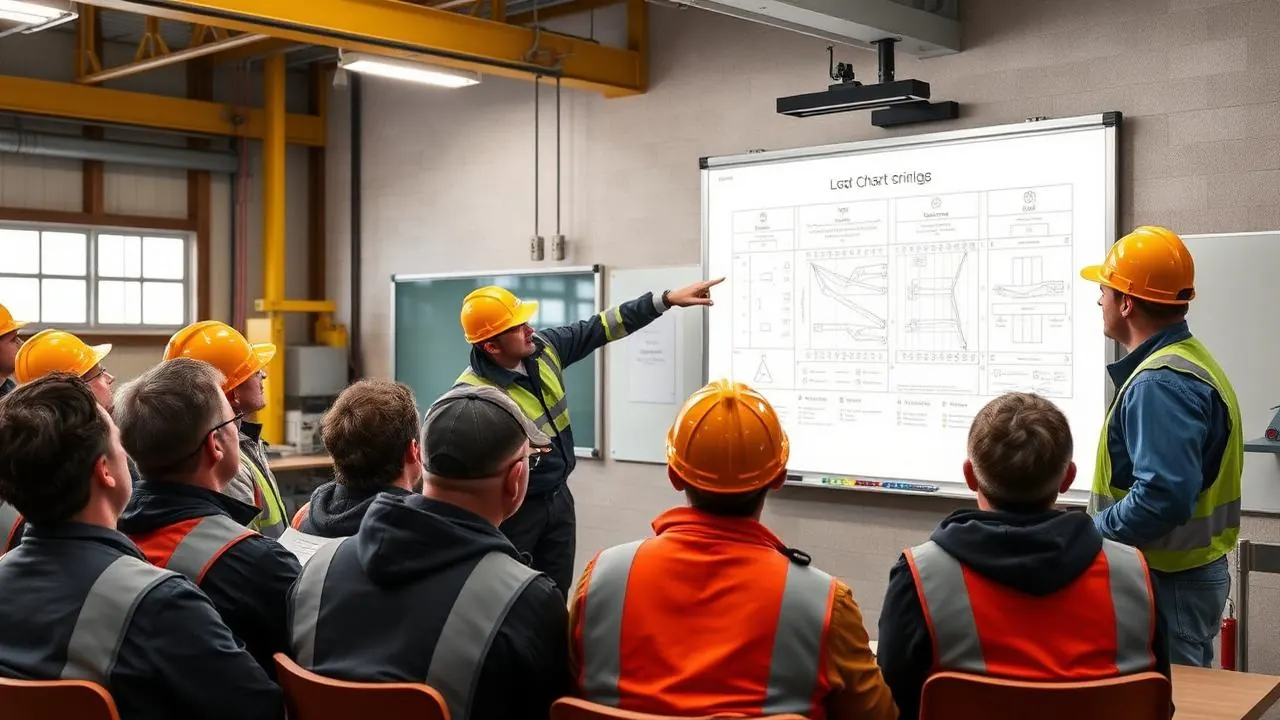
Classroom-only training produces operators who can pass a quiz and cannot spot a damaged wire rope. Hands-on-only training produces operators who can run the crane and cannot explain why they're not allowed to side-pull a load or what the load chart on the wall actually means. Both halves are required — and each is evaluated separately.
The current edition of CSA B167 moves explicitly toward a competency-based model: written evaluation, practical evaluation, and documented authorization that names the specific crane or crane class the operator is cleared to operate. A generic "crane operator" card that transfers across every piece of equipment in the plant is no longer defensible.
The theoretical half — what the classroom must cover
A theoretical module that survives an audit covers, at minimum:
1. Standards and legal framework. CSA B167 in Canada, OSHA 1910.179 and ASME B30.2/B30.9/B30.10/B30.11 in the US. Provincial OH&S regulations where applicable. The operator does not need to memorize clause numbers — they need to understand that a written standard governs what they do and that the standard names them personally.
2. Load dynamics and rigging fundamentals. Center of gravity, sling angles and their effect on tension, dynamic loading from acceleration and swing, side-pull and its consequences, two-blocking, load charts, and the mechanics of what happens when a crane is asked to do something it wasn't designed for.
3. Equipment familiarization. Crane types (top-running, under-running, single-girder, double-girder, gantry, jib, monorail), hoist types, control types (pendant, radio, cab), CMAA service class and what it means for the equipment in front of them.
4. Safety devices and their limits. Upper and lower limit switches, overload protection, anti-two-block, emergency stop, brakes (holding vs. load), warning devices — and critically, what happens when each one fails. A load limiter is not a lifting device; a limit switch is not an operating control.
5. Pre-use inspection. What the operator inspects daily, what a defect looks like on wire rope, hooks, chain, slings, controls and warning devices. When to red-tag the crane. Where the defect log lives.
6. Communication and signals. ASME B30.9/B30.10 hand signals, radio protocol, tag-line use, spotter roles, and how to shut down when communication is lost.
7. Emergency procedures. Power loss, brake failure, load hang-up, personnel in the swing zone, evacuation of a cab-operated crane, LOTO.
8. Authorization scope. What the operator is authorized to do — which crane(s), which lift types, which weight categories, and what triggers a lift plan or supervisor sign-off.
A written evaluation at the end of the theoretical module is the record. Multiple choice alone is not enough — short-answer questions on inspection, load charts and emergency response separate the operator who understood from the operator who guessed.
The practical half — what hands-on evaluation must include
The practical evaluation is equipment-specific and evaluated by a competent assessor — not the previous shift, not the vendor who sold the crane six years ago. Minimum scope:
1. Pre-use inspection performed correctly. The operator walks the crane and identifies the components, reads the load chart and nameplate, checks the hook, wire rope, hoist limit and controls, and logs the result.
2. Controls familiarization. Bridge, trolley and hoist directions and speeds. Micro-speed / creep. Emergency stop. Understanding of anti-sway or VFD features if the crane has them. The operator demonstrates smooth acceleration and deceleration — no plugging, no jerky starts.
3. Load handling. Pick, transport and set a load with: - No swing at the pick or set - No side-pull - Correct sling angles verified before lift - Load kept low during travel - Communication with the spotter or signaler maintained throughout
4. Blind and constrained lifts. Where the operator's line of sight is obstructed, radio or signaler communication is verified, and the operator demonstrates they will stop if communication is lost.
5. Load-chart application. Given a load and rigging configuration, the operator confirms the lift is within capacity and identifies when a lift plan is required.
6. Response to a simulated fault. Assessor calls out an emergency scenario (loss of one direction, brake set, load hang-up) and the operator demonstrates the correct shutdown and reporting procedure.
7. Post-use. Load down, hook up, controls off, defect log completed.
The assessor signs a practical evaluation record naming the operator, the specific crane, the date, the scope evaluated and any restrictions on authorization.
Documented authorization — the record that ties it together
The output of the program is not a card — it's a written authorization that names:
- The operator, with photo and ID
- The specific crane(s) or crane class the authorization covers
- Any restrictions (weight, lift type, shift, area)
- Date of theoretical evaluation, score, evaluator
- Date of practical evaluation, evaluator, scope
- Re-qualification interval and next-due date
- Employer signature
CSA B167 and most provincial OH&S regulators expect this record on file for every active operator and retained for a defined minimum period after separation.
Re-qualification is not optional
Skills decay. Equipment changes. Standards update. A defensible program re-qualifies operators on a defined interval — typically every three years, or sooner after an incident, a significant equipment change, or an extended absence from operation. Re-qualification is a shorter theoretical refresher plus a full practical re-evaluation on the specific equipment.
Where owners get this wrong
- Vendor-only training. The OEM's four-hour "familiarization" is a good start on the equipment; it is not a training program and it does not cover standards, inspection or authorization.
- One card, every crane. An operator authorized on a 5-ton pendant jib is not authorized on a 50-ton cab-operated ladle crane. B167-26 makes this explicit.
- No practical evaluator. The classroom happens, the practical never does, and the authorization form is signed anyway. This is the single most common finding in our program audits.
- No re-qualification. Cards from 2012 are still on the wall in 2026. Under the current standard, that is a live non-conformance.
- No integration with the inspection program. Operators are not trained on what to log in the defect book, so the daily inspection tier of the program is empty.
Where CAG fits
We design and audit operator training programs against CSA B167, OSHA 1910.179 and ASME B30, and we write the authorization templates that survive an audit. We are vendor-neutral, so the program we build reflects the standard and your fleet — not a training vendor's course catalog.
If your operator authorization list has not been re-verified in the last three years, or if the last training was delivered by the crane vendor at commissioning, that is where to start.
FAQ
Frequently asked questions
- What is the difference between theoretical and practical crane training?
- Theoretical training covers rules, load charts, rigging principles and hazard awareness. Practical training demonstrates control of the specific crane the operator will use, including load control, spotting and abnormal conditions.
- Is classroom training alone enough?
- No. Competency requires demonstrated practical ability on the equipment being used, plus employer authorization for the specific cranes and tasks.
- How should operator competency be documented?
- Retain the training record, the practical evaluation, the equipment covered and the employer authorization. That package is what demonstrates due diligence.
Related services
How CAG helps on this
Related industries
Industry pages worth reading next
More field notes