A WorkSafeBC prevention officer has requested crane records
British Columbia · Overhead Cranes & Hoists
WorkSafeBC Overhead Crane Compliance Help
Facing a WorkSafeBC inspection, order, internal audit or documentation gap? Crane Advisory Group helps B.C. employers quickly identify what applies, organize the available evidence and build a practical corrective-action plan for bridge cranes, gantry cranes, monorails and hoists.
780-222-0344 · advice@craneadvisorygroup.ca
Direct response within one business day · Confidential · Independent of crane service providers
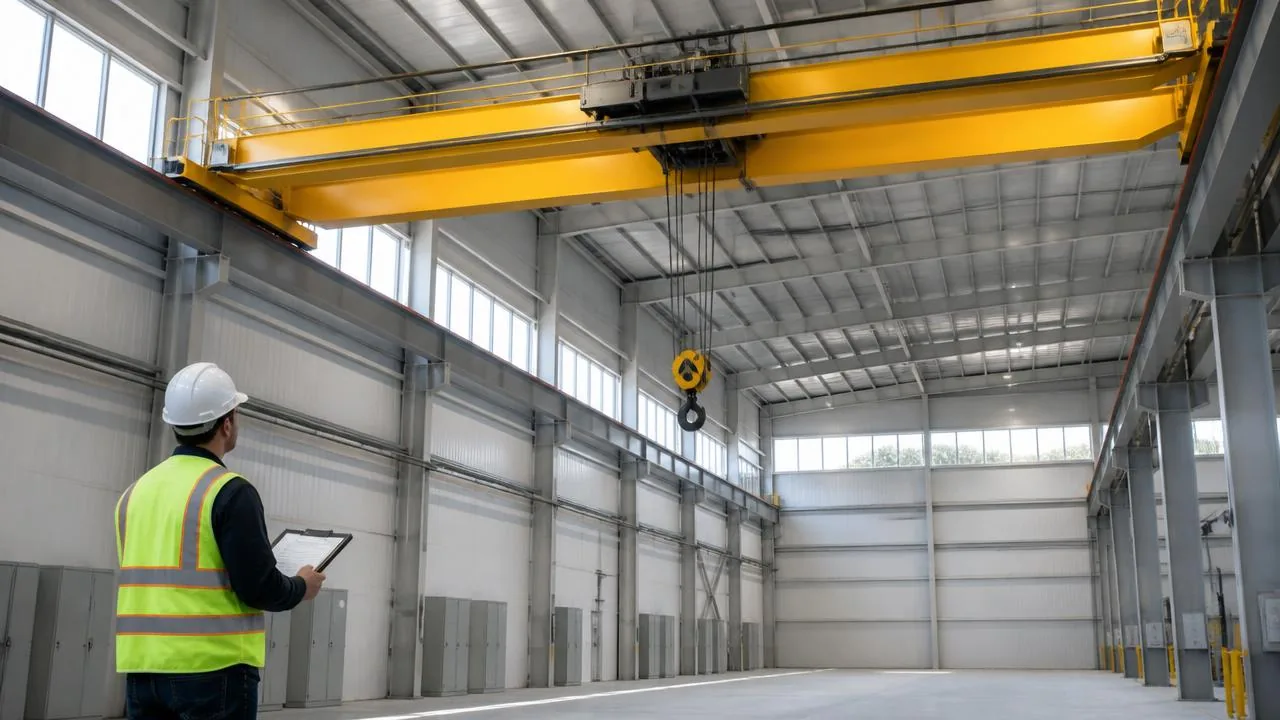
Received a WorkSafeBC Crane Order or Preparing for an Inspection?
CAG can help review your crane inspection reports, maintenance records, open deficiencies and existing corrective-action plan so your team can identify gaps and organize the next steps quickly.
WorkSafeBC Corrective-Action Support
Potential support, depending on the order, the equipment and the records available:
- Review WorkSafeBC correspondence
- Review crane inspection reports
- Review maintenance documentation
- Organize open deficiencies
- Prioritize corrective actions
- Assign responsibilities
- Identify missing records
- Coordinate questions for the inspection provider
- Identify matters requiring professional engineering
- Prepare a management-ready progress summary
CAG provides independent advisory and documentation support. CAG does not represent WorkSafeBC, perform enforcement inspections, certify compliance, replace required professional engineering or guarantee regulatory acceptance.
Move toward compliance with a focused plan
The fastest path is to establish which WorkSafeBC requirements apply to the equipment, determine what records and supporting evidence already exist, and separate documentation gaps from items requiring a qualified inspector, original equipment manufacturer or professional engineer.
CAG provides independent, owner-side advisory support. We help organize the requirement, review the available evidence, prioritize gaps and coordinate the next actions without selling inspections, repairs, parts or replacement equipment.
When should a B.C. employer call?
A crane-related order or corrective action has been issued
Inspection or maintenance records cannot be located
The crane manufacturer's manual is missing
Operator competency cannot be demonstrated
Pre-use inspections are inconsistent or undocumented
A crane has been repaired, modified or modernized
A crane has experienced a shock load, dropped load, brake failure or other misadventure
Capacity markings, identification or equipment history are unclear
An internal audit, insurer or customer has questioned the crane program
WorkSafeBC overhead-crane readiness review
Depending on the equipment and situation, the review may include the following areas of WorkSafeBC OHS Regulation Part 14 and Part 15.
- Equipment identification and rated-capacity markings
- Manufacturer manuals or engineer-approved instructions
- Inspection, maintenance and repair requirements
- Inspection and maintenance record availability
- Load-bearing repairs and engineering documentation
- Crane and control-system modifications
- Response after shock loading, loss of load, brake failure or another misadventure
- Operator qualification, instruction and demonstrated competency
- Pre-use shift inspections and testing of safety devices
- Load information, overload protection and calibration records
- Operational tests, detailed inspections and return-to-service documentation
- Upper-limit devices, direction markings and electrical safeguards
- Slings, attachments and below-the-hook equipment governance
This is not a complete regulatory checklist. Which requirements apply depends on the equipment, its history, the manufacturer's instructions and the safety standard applicable under Part 14. WorkSafeBC OHS Regulation section 14.2 lists CSA B167-96 and specified ASME B30 standards among the applicable safety-standard options for bridge, jib, monorail, gantry and overhead travelling cranes. Manufacturer or professional-engineer instructions and the other requirements of Part 14 must also be considered. Verify the current regulatory text through WorkSafeBC before relying on this page.
How CAG helps you respond
- Step 01
Call or email CAG and explain what prompted the review.
- Step 02
Securely provide the available crane list, inspection reports, maintenance records and relevant correspondence.
- Step 03
CAG identifies immediate priorities, missing evidence and items requiring a qualified service provider, OEM or professional engineer.
- Step 04
The owner receives a practical corrective-action plan and support coordinating the required next steps.
CAG does not guarantee or certify compliance. We help employers understand the requirement, identify gaps and move the corrective work forward efficiently.
B.C. Questions
WorkSafeBC overhead crane questions
- Does a WorkSafeBC overhead-crane operator need the same certification as a mobile- or tower-crane operator?
- No. WorkSafeBC's formal crane-operator certification program identifies boom trucks, mobile cranes and tower cranes. Overhead and bridge-crane operators are instead subject to the qualification and competency requirements in OHS Regulation section 14.34. They must be instructed on the equipment and demonstrate competency, including familiarity with its operating instructions and the authorized code of signals.
- Does WorkSafeBC require overhead cranes to be inspected?
- Yes. Part 14 requires cranes and hoists to be inspected and maintained at the frequency and to the extent needed to ensure their components can perform their original design functions with an adequate margin of safety. The manufacturer, applicable standard, equipment use and operating conditions affect the required inspection program.
- Does CAG perform the crane inspection?
- No. CAG provides independent owner-side advisory support. Qualified inspection, repair, testing or professional-engineering work remains with appropriately qualified providers.
- Can CAG help after receiving a WorkSafeBC order?
- Yes. CAG can review the crane-related requirement, organize the available evidence, identify gaps and help the owner establish a practical response and corrective-action plan. CAG does not act as WorkSafeBC or provide legal advice.
- What should we have available?
- Start with the crane asset list, manufacturer and serial information, rated capacities, manuals, inspection reports, maintenance and repair records, modification history, load-test documentation and operator competency records. Contact CAG even if some of this information is missing.
Scope of CAG's role
CAG provides independent, owner-side advisory review. CAG is not a regulator, inspection authority or certifying body, and does not certify or guarantee compliance. Where professional engineering certification is legally required, it must be provided by a qualified professional engineer licensed in the applicable jurisdiction.
Prefer to send details in writing?
Calling 780-222-0344 or emailing advice@craneadvisorygroup.ca is the fastest route. This form reaches the same place.
Related reading
- Overhead crane safety requirements in Canada, by province
- CSA B167 — which edition applies to your cranes
- Crane safety and compliance review
- Overhead crane operator training in Canada
- Overhead crane inspection guide
- Preventive maintenance program development
- B.C.'s new crane licensing and permitting program — what it means for owners
Need more than a one-time review?
Corporate Crane Program Management combines these services into an ongoing independent management program for your crane fleet — maintenance strategy, deficiencies, contractor performance, repair spending and capital planning. See Corporate Crane Program Management.