What Should Owners Consider Before Adding Load Monitoring?
Load cells, crane scales and overload systems are not interchangeable. What owners should settle before buying — accuracy, purpose, integration and who uses the data.
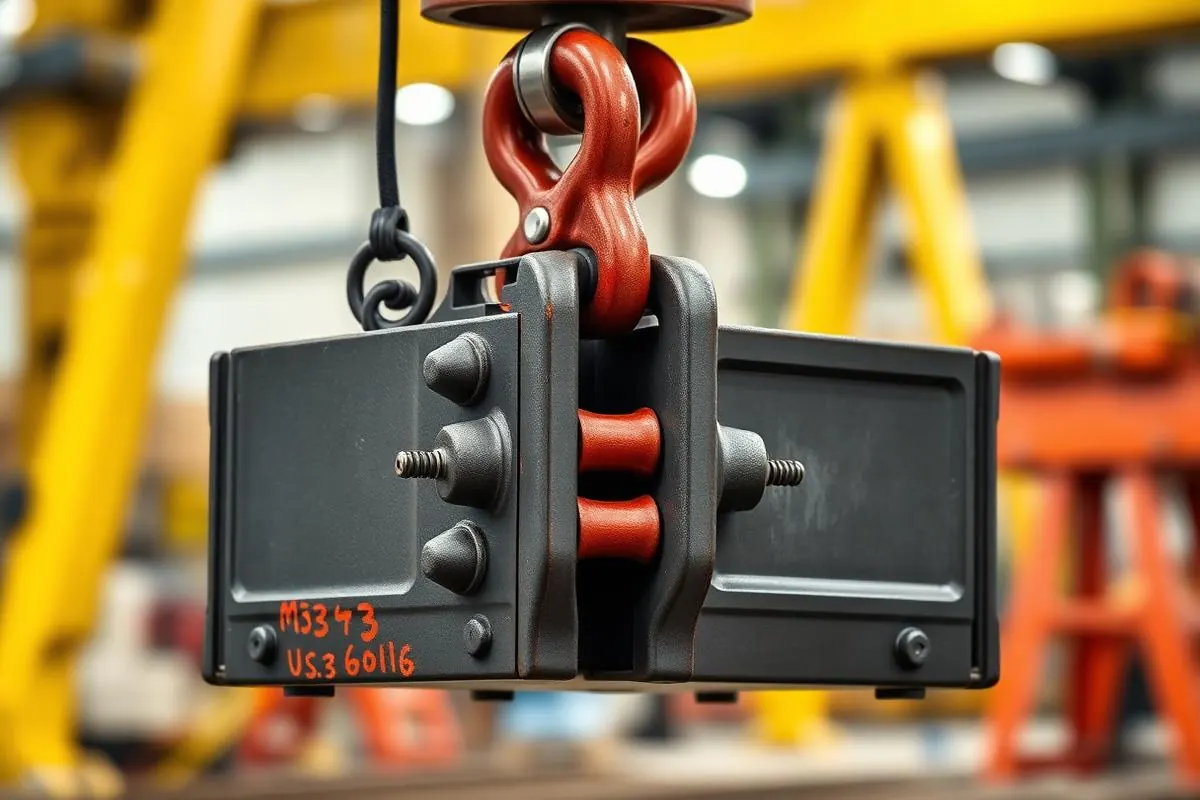
Load monitoring is one of the most commonly proposed crane upgrades, and one of the most commonly mis-scoped. The word covers at least three different products solving three different problems.
Three different objectives
- Protection — preventing the crane from lifting beyond its rated capacity, and protecting the structure and hoist from overload events.
- Production — knowing the weight of the load as a process record: billing, batching, shipping, inventory.
- Insight — logging duty and usage over time to inform inspection intervals, maintenance and remaining-life discussions.
Equipment sized for one objective frequently disappoints on another. A protection device is not a trade-approved scale. A crane scale is not a duty logger.
Why it matters
An overload event can damage the girder, the hoist, the rope and the brake in ways that do not show up until the next inspection — or until something lets go. On the other side, a weighing system installed for production data that turns out not to be accurate enough for the intended use is simply a cost with no return.
Both failures start the same way: the objective was never written down before the product was chosen.

Questions to settle first
- What decision or record does the number support, and who relies on it?
- What accuracy is genuinely required — and is legal-for-trade certification in scope?
- Does the system need to stop the crane, warn the operator, or only record?
- Where is the reading displayed, and is it visible where the decision is made?
- How does it integrate with existing controls and any plant data system?
- Who calibrates it, at what interval, and what happens when it drifts?
- What is the added dead load and headroom impact on the existing crane?
Complexity worth respecting
Retrofitting to an existing crane brings in structure, controls, electrification and — depending on what the system is allowed to do — safeguarding obligations under CSA B167 and ASME B30. The right answer is rarely the cheapest device on the page.
Where independent review helps
If you have proposals in hand and cannot tell whether they are solving the same problem, an owner-side review will separate the objective from the product and put the quotes on a common basis.
Next step: Request a Crane Technology Review or see the Independent Crane Technology Review service.
FAQ
Frequently asked questions
- Is load monitoring worth adding to an existing overhead crane?
- It is worth adding when there is a defined use for the data — overload prevention, duty verification, capacity planning or incident investigation. Installed without an owner for the data, it becomes an unread display.
- Will load monitoring void the crane warranty or certification?
- Any retrofit that interfaces with the hoist control or load path should be reviewed for compatibility and documented. Coordinate with the OEM or a qualified engineer before installation so certification and warranty status stay intact.
- What accuracy do I actually need?
- Overload protection needs reliable threshold detection rather than laboratory precision. Duty-cycle analysis and capacity planning benefit from higher accuracy and data logging. Specify the accuracy the decision requires, not the highest number available.
Related services
How CAG helps on this
More field notes